
By Dr. Gavin McAuley | EMPOWERVIDA
TL;DR
ADHD is increasingly viewed through the lens of executive dysfunction and catecholamine (dopamine/norepinephrine) dysregulation. While stimulants are the gold standard, they often "borrow energy from tomorrow to use today." Supplementing with precursors like L-Tyrosine, co-factors like Zinc and B6, and mitochondrial support can stabilise the "neural floor," making focus more sustainable and reducing the stimulant "crash."
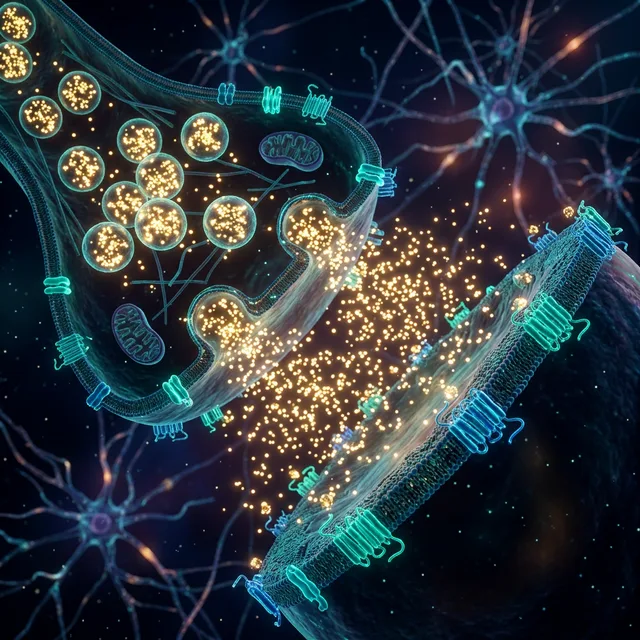
The Physician's Observation: The "Flickering" Focus
There has been an observable shift in recent trends. Patients aren't just coming in for "distraction"; they are describing a state of profound mental fatigue. They are often high achievers who have "white-knuckled" their way through life, only to find their executive function crumbling under the weight of modern digital demands.
Personally, I've navigated the "Doctor's Workload"—the endless charting and cognitive switching. I've found that focus isn't just a mental state; it's a metabolic state. When I optimised my own micronutrient co-factors, specifically focusing on the precursors for dopamine synthesis, the "mental friction" of starting a task significantly decreased. We aren't just treating a "disorder"; we are optimising the brain's fuel efficiency.
The Biochemistry: Building the Dopamine Pathway
Most ADHD interventions focus on keeping dopamine in the synapse longer. However, if your "dopamine factory" is low on raw materials, you are effectively "whipping a tired horse."
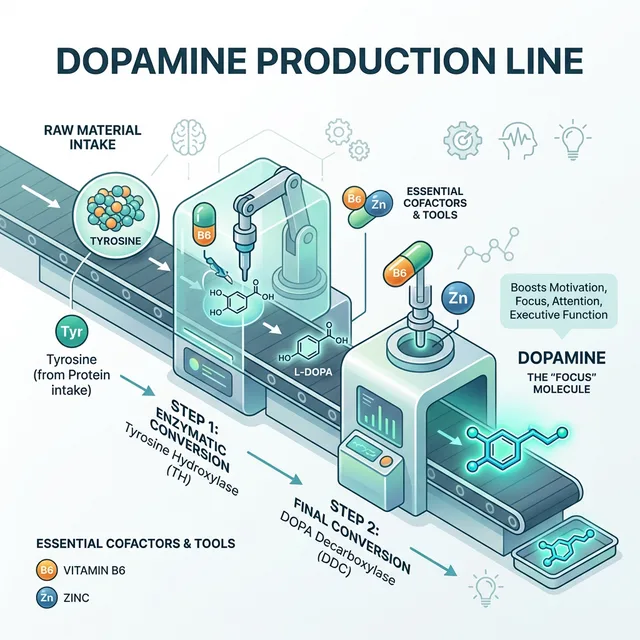
The neurotransmitter pathway looks like this:
L-Tyrosine → (Tyrosine Hydroxylase) → L-DOPA → (DDC) → Dopamine
For these enzymes to function, they require specific "Architectural Co-factors":
- Iron & P5P (Vitamin B6): Essential for the rate-limiting step of dopamine production.
- Zinc: Regulates dopamine transport and is often found to be deficient in children and adults with ADHD.
- Magnesium (Again): Modulates the NMDA receptors to prevent the "over-firing" and anxiety often associated with ADHD.
The "Neural Floor": Why Omega-3s and Magnesium Matter
We cannot talk about ADHD without discussing the structural integrity of the brain. The brain is roughly 60% fat.
A meta-analysis of clinical trials has shown that individuals with ADHD often have lower blood levels of Omega-3 fatty acids (EPA and DHA). Supplementing with a high-EPA oil doesn't just "help focus"; it reduces neuro-inflammation, allowing the signal-to-noise ratio in the prefrontal cortex to improve.
Pairing this with Magnesium L-Threonate—the only form of magnesium that effectively crosses the blood-brain barrier—creates what I call the "Neural Floor." It stabilises the brain's excitability, reducing that "internal jitteriness" that many ADHD patients describe as a constant background hum.
The Sleep-Focus Feedback Loop
One of the most common "Physician's Notes" I make in ADHD cases is the disruption of circadian biology. ADHD brains often have a "delayed sleep phase." They feel most creative at midnight and exhausted at 8:00 AM.
As we discussed in the Vitamin D/Magnesium article, sleep is the period of Glymphatic clearance. If an ADHD brain doesn't clear metabolic waste, the next day's executive function is doomed. Educational frameworks often suggest my evening Magnesium/Glycine protocol here as well, specifically to "quiet" the default mode network (DMN)—the part of the brain that keeps you ruminating when you should be sleeping.
Biohacking Your Labs: The ADHD Panel
To treat this clinically, we must move beyond subjective surveys. Educational frameworks often suggest:
- Ferritin (Iron Stores): Low iron is highly correlated with ADHD severity.
- Zinc-Copper Ratio: An imbalance here can lead to neurotransmitter "noise."
- Omega-3 Index: A finger-prick test to see if your cell membranes have enough EPA/DHA to function.
The Architect's ADHD Stack
If you are looking to build a foundation for focus, this is the physician-verified hierarchy:
- The Precursor: L-Tyrosine (500–1,000 mg) in the morning on an empty stomach.
- The Foundation: High-EPA Omega-3 Fish Oil (at least 1,000 mg EPA).
- The Co-Factors: A high-quality B-Complex (with P5P) and Zinc Picolinate.
- The "Quiet": Magnesium L-Threonate or Glycinate in the evening.
Safety & Contraindications
As a physician, I must emphasize:
- MAOIs: Do not take L-Tyrosine if you are on MAO-Inhibitors.
- Stimulant Synergy: If you are already prescribed medication (e.g., Adderall, Ritalin), consult your doctor. L-Tyrosine can potentiate these medications, potentially leading to hypertension or tachycardia.
- Blood Pressure: High-dose Tyrosine can occasionally affect thyroid hormone levels or blood pressure.
Final Physician's Note
ADHD is not a deficit of "willpower"; it is a challenge of regulation. By providing the brain with the biochemical tools it needs to build and transport neurotransmitters, we move from "surviving the day" to "architecting a life." Focus is a resource—make sure your brain has the budget to spend it.
Medical Disclaimer
This information is for educational purposes and does not constitute medical advice. ADHD is a complex neurodevelopmental condition. Do not adjust or discontinue prescribed medications without consulting your physician. The supplements discussed here are intended as adjunctive support, not replacements for evidence-based treatment.