
By Dr. Gavin McAuley, MBChB | EMPOWERVIDA
We have all felt it.
You step away from the glare of your monitors, the relentless pinging of notifications, and the concrete lines of modern life. You walk into a forest. You take a deep, involuntary breath, and as you exhale, an immediate wave of relief washes over your nervous system.
You didn't need a medical degree to know that your mind was calming down. But what you might not realize is that you were engaging in a highly researched, biophilic medical intervention.
In Japan, it is known as Shinrin-yoku (literally translated as "Forest Bathing"). In Germany, it has long been integrated into clinical therapeutic frameworks under Kurort (resort/spa) medicine, where doctors actively prescribe time in certified healing forests.
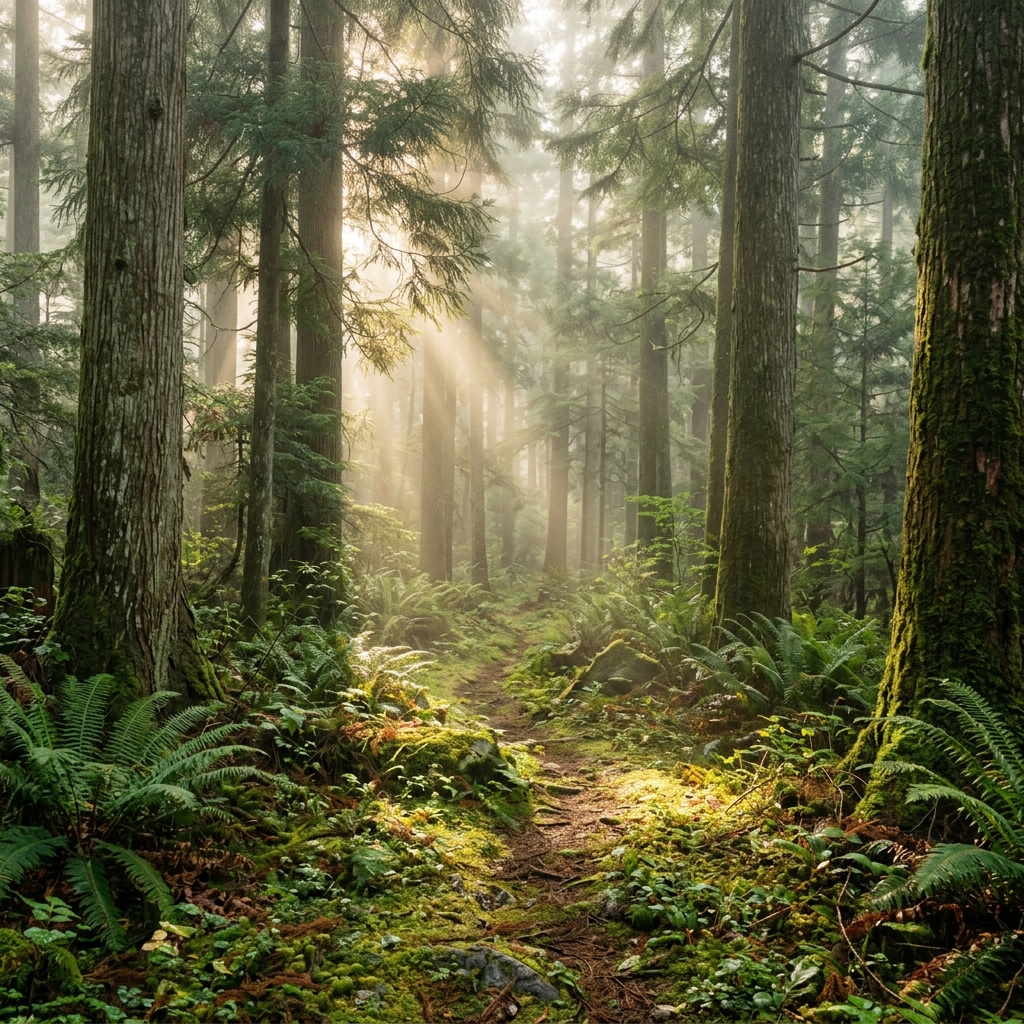
Shinrin-yoku: Effortless down-regulation of the modern sympathetic nervous system. Source: Elohee Retreat Center
This isn’t just psychological escapism or "woo-woo" wellness. It is a precise biochemical dialogue between the physiology of a tree and the biology of a human being. Here is exactly what happens to your brain and body when you step into the trees, and how to practice it to maximize your health span.
1. The Terpene Effect: Inhaling the Forest’s Immune System
When you walk through a forest—especially one dense with conifers like pine, cedar, eucalyptus, or cypress—the crisp, distinct aroma you smell is actually an airborne cocktail of volatile organic compounds called phytoncides.
Trees secrete these compounds, primarily alpha-pinene, beta-pinene, and limonene, as an evolutionary defense mechanism to protect themselves from harmful bacteria, fungi, and insects. When we walk through the woods, we inhale them.
The biochemical cascade: How airborne plant compounds interact with human physiology. Source: Davies White Landscape Architects
The human physiological response to inhaling these terpenes is profound:
- Natural Killer (NK) Cell Activation: A landmark study led by Dr. Qing Li at the Nippon Medical School demonstrated that individuals who spent two nights in a forest environment showed a massive 50% increase in the activity of Natural Killer (NK) cells—the specialized white blood cells responsible for hunting down viral infections and tumor cells.
- Intracellular Protection: This immersion significantly up-regulated anti-cancer proteins within our cells, including perforin, granulysin, and granzyme A.
- The Residual Shield: Incredibly, this immune-boosting effect didn’t vanish when the participants went home. The elevated NK cell activity persisted in their bloodstream for up to 30 days after a single weekend of forest exposure.
The Medical Takeaway: Inhaling forest terpenes is essentially a natural, non-pharmacological up-regulation of your innate immune architecture.
2. Rewiring a Hectic Mind: The Autonomic Nervous System Shift
The human brain evolved over millennia in dynamic, organic environments. Today, we spend roughly 90% of our lives indoors under artificial blue light, exposed to what researchers call Technostress—the chronic, low-grade activation of the sympathetic nervous system caused by constant digital connectivity.
When you are trapped in a sympathetic "fight-or-flight" loop, your body is flooded with cortisol and adrenaline. Your blood pressure creeps up, your heart rate variability (HRV) drops, and your brain stays locked in high-frequency Beta brainwaves, which are associated with alertness, anxiety, and eventual cognitive fatigue.
Forest bathing triggers an immediate, systemic pivot from the sympathetic to the parasympathetic nervous system ("rest and digest"):
↓
[FOREST IMMERSION] -> Low Cortisol -> Parasympathetic Shift -> Alpha Waves (Calm)
Clinical trials comparing urban walks to forest walks show that forest environments cause a sharp reduction in salivary cortisol, a stabilization of blood pressure, and a marked increase in HRV (a primary marker of stress resilience).
Furthermore, the visual environment of a forest is rich in fractals—repeating, self-similar geometric patterns found in ferns, tree branches, and leaf veins. The human visual cortex processes natural fractals effortlessly. This visual ease shifts our baseline neural activity away from hectic Beta waves and into smooth, rhythmic Alpha and Theta brainwaves. This is the exact neural state achieved during deep meditation, but inside a forest, the environment does the heavy lifting for you.
3. The 4 Steps to an Effective Forest Bath
Forest bathing is not a strenuous hike. It is not a cardio session, and it is certainly not a trail run designed to hit a specific Zone 2 heart rate target. It is an intentional, sensory immersion.
To transition your next walk into a legitimate therapeutic session, follow this clinical protocol:
Enforce a Digital Blackout
Non-Negotiable. Power down your phone, remove your fitness tracker, and leave your headphones in the car. If your brain is anticipating the next notification or tracking your step count, you remain anchored to your sympathetic drive.
Downshift Your Velocity
Move Without a Goal. Walk at a fraction of your normal pace. Meander. Stop when something catches your eye. Sit on a fallen log or lean against a tree trunk. Your explicit goal is to have no destination.
Engage Your Sensory Anchors
The Mindfulness Pivot. Actively run through your five senses to anchor your busy mind into the here and now:
- Sight: Watch the dappled sunlight (Komorebi in Japanese) filtering through the canopy.
- Sound: Listen to the wind moving the upper leaves, or the distant trickle of water.
- Touch: Feel the rough texture of moss, bark, or dry soil underfoot.
- Smell: Take deep, diaphragmatic breaths to maximize your terpene intake.
Prolong the Exposure
The 2-Hour Threshold. While even 20 minutes in nature drops cortisol levels, the clinical data suggests that a session lasting between 1.5 to 2 hours yields the deepest, most sustained drops in systemic inflammation and autonomic calming.
4. The Modern Solution: Bringing the Forest Indoors
What if you live in a dense metropolitan area, or your current schedule simply doesn't allow for a two-hour mid-week escape to an old-growth forest?
While nothing completely replaces the systemic benefit of true biophilic immersion, we can use targeted biochemical tools to mimic these evolutionary pathways from your home or clinic office:
Airborne Terpene Diffusion
You can leverage the exact same plant compounds discovered by researchers. Utilizing a premium ultrasonic diffuser, diffuse organic, therapeutic-grade conifer essential oils during your focused work blocks. Look for Hinoki Cedarwood, Scots Pine, Silver Fir, or Juniper Berry. These oils are incredibly rich in alpha-pinene and limonene, helping to foster an environment that promotes focus while dampening background anxiety.
Neurological Countermeasures
If your mind is too restless to settle into meditation or access the outdoors, you can utilize clean, doctor-verified nutraceuticals that replicate the alpha-brainwave states induced by nature:
- L-Theanine: An amino acid natively found in high-grade Matcha green tea. At doses of 100–200mg, L-Theanine readily crosses the blood-brain barrier to up-regulate GABA production and trigger the generation of calm, focused Alpha brainwaves without causing drowsiness. We recommend clinical-grade L-Theanine on iHerb (use referral code FKX4668 for a discount).
- Magnesium Threonate: A highly bioavailable form of magnesium that effectively crosses into the central nervous system, helping to down-regulate over-stimulated NMDA receptors and settle a racing mind. We recommend Magnesium L-Threonate on iHerb (use referral code FKX4668 for a discount).
The Bottom Line
Your busy mind is not a personal failure; it is the predictable physiological outcome of a modern world that is completely decoupled from our evolutionary biology.
Forest bathing is a gentle, accessible, yet medically robust reminder that the human body is designed to heal in partnership with nature. It is time we stop viewing time in the woods as an optional luxury, and start treating it as an absolute foundational pillar of preventative medicine.
The next time your mind feels overwhelmed, don't look for a new app or a sharper productivity hack. Go outside, find the trees, and let the biochemistry of the forest do the rest.
Medical Disclaimer: This article is for educational purposes only and does not constitute medical advice. Consult your physician before starting any new supplement regimen or lifestyle changes, particularly if you have existing medical conditions or take prescription medications.