By Dr. Gavin | EMPOWERVIDA
TL;DR
"Tired but wired" means your cortisol curve is inverted. You have low cortisol in the morning (groggy) and high cortisol at night (insomnia). Fix: Morning sunlight (resets circadian clock), Adaptogens (Ashwagandha KSM-66) to modulate stress, and Phosphatidylserine to lower evening cortisol.
Transparency Note: I am a physician, but I am not your physician. The content on Empowervida is for educational purposes only and does not constitute medical advice. Some recommendations below contain affiliate links, meaning we earn a small commission at no extra cost to you. I only recommend products I have clinically verified.
It is 10:30 PM. You have been exhausted all day. You struggled to keep your eyes open during your 2:00 PM meeting. You told yourself, "Tonight, I am going to sleep early."
But the moment your head hits the pillow, your eyes pop open. Your body is tired, but your mind is racing. You are making to-do lists. You are replaying conversations. You are suddenly, frustratingly, wide awake.
We call this "Tired but Wired." In medicine, we call it HPA Axis Dysregulation.
The Medical Reality: The Inverted Curve
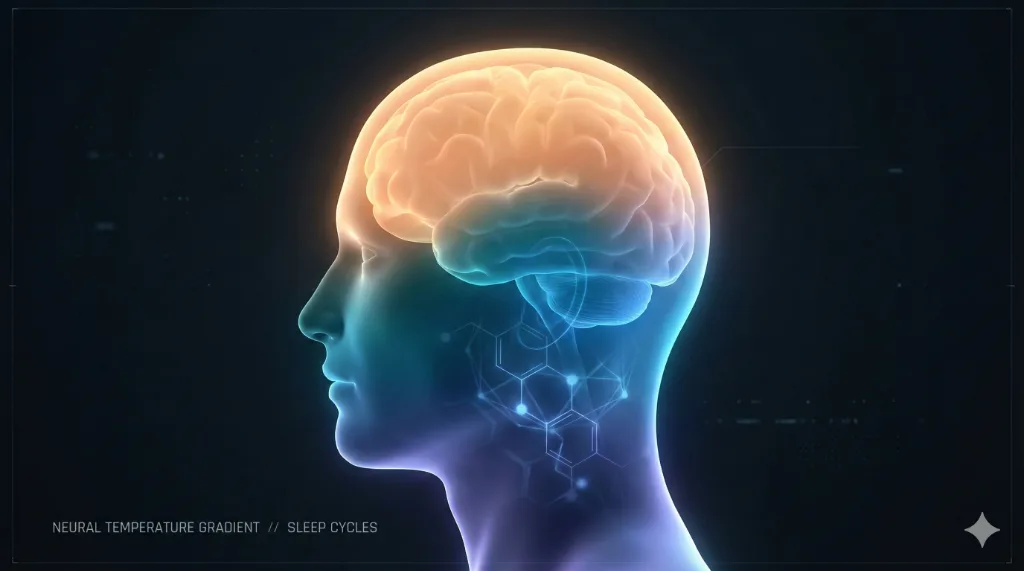
Your body runs on a strict hormonal schedule called the Circadian Rhythm.
- Morning: Cortisol (stress hormone) should be HIGH to wake you up.
- Evening: Cortisol should be LOW to let Melatonin (sleep hormone) rise.
For many of my patients, this curve is inverted. Because of chronic stress, blue light, and caffeine, their body thinks 10:00 PM is the start of the workday. You are getting a "second wind" of cortisol right when you should be crashing.

The Damage: Stress Makes You Fat (Literally)
This isn't just about losing sleep. Chronically high cortisol is toxic.
- It eats your memory: Cortisol is neurotoxic to the Hippocampus (the memory centre).
- It changes your shape: Cortisol tells your body to store fat specifically in the visceral area (belly fat) to protect the organs during "danger."
If you are "eating right" but still hold weight around your midsection, and you can't sleep at night, you don't have a diet problem. You have a stress problem.
The Solution: The "Thermostat" (Ashwagandha)
You cannot just "relax." If your chemistry is high, you need chemistry to lower it.
This is where Adaptogens come in. An adaptogen is not a sedative. It doesn't knock you out like a sleeping pill. Instead, it acts like a thermostat. If your cortisol is too high, it brings it down. If it's too low, it brings it up.
The king of clinical adaptogens is Ashwagandha.
The Data: A randomized, double-blind study published in the Indian Journal of Psychological Medicine found that high-concentration Ashwagandha root extract reduced serum cortisol levels by 27.9% after 60 days.
Imagine lowering your baseline stress by nearly 30% just by taking a root extract.

The Protocol: Use the Right Form
Most Ashwagandha on the shelf is just ground-up leaves (weak). You need the root extract. Look for KSM-66® or Sensoril®. These are the patented extracts used in the clinical trials.
When: Take it with dinner or 2 hours before bed.
Why: It blunts the evening cortisol spike, allowing your natural melatonin to finally do its job.
THE TAKEAWAY
You aren't broken, and you aren't an insomniac. Your alarm system is just stuck in the "ON" position. Reset the alarm. Lower the cortisol. Sleep.
TOOL: The Clinical Extract (KSM-66)
I only recommend Ashwagandha that uses the KSM-66 extraction process, as it preserves the full spectrum of active withanolides without chemical solvents.
in functional settings, the patients who resolve their insomnia fastest are those who address the cortisol curve first, before reaching for melatonin or sleep supplements.
The Melatonin Misconception
Most people reach for melatonin when they cannot sleep. This is a mistake if cortisol is the problem. Melatonin is a sleep signal, not a sleep force. If your cortisol is still elevated at 10 PM, melatonin cannot overpower it. You are trying to whisper "sleep" while cortisol is screaming "danger." The whisper will always lose.
Moreover, chronic melatonin supplementation above 0.5mg can downregulate your body's own production. I see patients who have been taking 5-10mg nightly for years and wonder why it has stopped working. Their pineal gland has effectively retired. If you must use melatonin, 0.3-0.5mg is the physiological dose. Anything higher is pharmacological, and should be treated as such.
This is something that genuinely frustrates me about modern medicine. We continue to prescribe valium and quetiapine for insomnia — drugs with real dependency risk, metabolic side effects, and cognitive impairment — while most of my colleagues are not even aware that magnesium glycinate is highly effective for sleep. An £8 bottle, no prescription required, no dependency potential, and it actually addresses the underlying deficiency rather than sedating the symptom. The average Western diet is chronically low in magnesium. Up to 50% of the population is subclinically deficient. Yet when An individual presents with insomnia, the reflex is to reach for the prescription pad. I wish I had known this in my first year as a doctor. It would have changed how I practiced from day one.
The Functional Range: Standard serum magnesium tests are almost useless — only 1% of your body's magnesium is in the blood. A "normal" result of 0.85 mmol/L tells you nothing about intracellular stores. In my clinic, we don't settle for "normal"; we aim for the upper quartile (0.9-1.0 mmol/L) and supplement accordingly. Most patients notice a difference in sleep quality within the first week of magnesium glycinate at 400-600mg before bed.
The Missing Piece: Phosphatidylserine
There is a compound that directly blunts the evening cortisol spike without sedation: Phosphatidylserine (PS). It is a phospholipid found in high concentrations in brain cell membranes. A study in the Journal of the International Society of Sports Nutrition demonstrated that 600mg of PS taken before a stressful event reduced cortisol output by 20%. For my individuals struggling with sleep, a lower dose is often used (200-400mg) taken with dinner. It gently lowers the evening cortisol ceiling, allowing melatonin to rise naturally.
Unlike Ashwagandha, which modulates the entire HPA axis over weeks, Phosphatidylserine works acutely. Many individuals notice improved sleep onset within the first few nights. The two compounds are synergistic: Ashwagandha reshapes the cortisol curve over time, whilst PS provides immediate evening relief.
Clinical Observation
Shift workers and high-stress professionals frequently present with sleep maintenance insomnia that is entirely resistant to high-dose melatonin. These patients often exhibit a classic inverted cortisol curve on salivary testing (low morning cortisol, elevated evening cortisol) and struggle with stubborn visceral fat despite regular exercise. When the clinical approach shifts from forcing sleep with sedatives to lowering the evening cortisol ceiling—using tools like Phosphatidylserine and adaptogenic Ashwagandha alongside strict caffeine curfews—it is common to observe a significant reduction in sleep onset time. As the cortisol curve normalizes, sleep architecture is frequently restored and the metabolic drive to store visceral fat is diminished. Cortisol is often the keystone; once it is regulated, sleep naturally follows.
The foundational protocol is simple: no screens after 9 PM (blue light suppresses melatonin by up to 50%), no caffeine after midday (its half-life is 6 hours, meaning a 2 PM coffee is still half-active at 8 PM), and a 10-minute evening routine of deep breathing or journaling to signal the parasympathetic nervous system. These three habits alone frequently resolve mild to moderate insomnia without the need for supplementation.
An Educational Framework
- Reset the clock: Morning sunlight within 30 minutes of waking (10-15 minutes, no sunglasses). This triggers the cortisol awakening response and sets your circadian master clock. No caffeine for the first 90 minutes after waking.
- Lower the ceiling: Ashwagandha KSM-66 (600mg) with dinner + Phosphatidylserine (300mg) at 8 PM. This combination blunts evening cortisol from two angles. No screens after 9 PM; use blue-light blockers if you must.
- Protect the window: Room temperature below 18°C, blackout curtains, and if using melatonin, reduce to 0.3mg (physiological dose). Test a 4-point salivary cortisol panel at baseline and 90 days to confirm the curve is normalising.
Related Reading
- how sleep flushes brain waste — glymphatic system
- cold exposure for dopamine — natural energy reset
SCIENTIFIC REFERENCES
- Chandrasekhar, K., et al. (2012). "A prospective, randomized double-blind, placebo-controlled study of safety and efficacy of a high-concentration full-spectrum extract of ashwagandha root in reducing stress and anxiety in adults." Indian Journal of Psychological Medicine.
- Lopresti, A. L., et al. (2019). "An investigation into the stress-relieving and pharmacological actions of an ashwagandha (Withania somnifera) extract." Medicine.
- Wambier, C. G., et al. (2018). "Cortisol levels and hair loss." Journal of Drugs in Dermatology.
Clinical Addendum
This content is for educational and informational purposes only. It is not intended as medical advice and should not replace consultation with a qualified healthcare professional. Always consult your physician before starting any new supplement, diet, or exercise programme.