
By Dr. Gavin McAuley | EMPOWERVIDA
TL;DR
Probiotics are live beneficial bacteria, but without Prebiotics (specialised plant fibres), they cannot colonise the gut effectively. To fix bloating, boost immunity, and clear the "gut-brain fog," you must follow a dual-protocol: seeding the gut with diverse strains and feeding them with fermentable fibres.
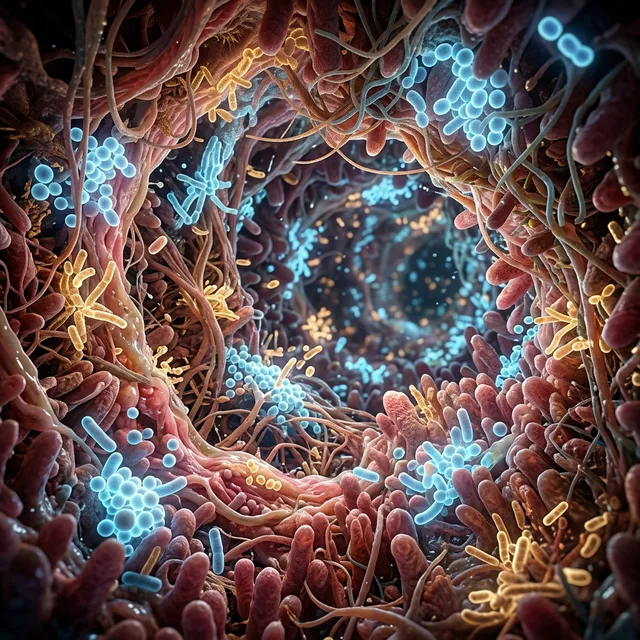
The Clinical Observation: The "Sterile" Struggle
Traditional medical paradigms often view the gut primarily through the lens of pathology—treating acute infections or managing irritable bowel syndrome. However, in preventative and functional medicine, a recurring pattern emerges: patients frequently invest heavily in high-CFU probiotics and "Soil-Based Organisms," yet gastrointestinal symptoms persist without resolution.
This highlights a critical misunderstanding in microbiome restoration. One cannot simply repopulate a decimated microbiome—such as following a course of broad-spectrum antibiotics—by merely ingesting transient bacteria. Probiotics must not be viewed merely as a "supplement," but as components of a living ecosystem that require highly specific substrates (fuel) to colonise and thrive.
The Biochemistry: Seeding vs. Feeding
In medical terms, we are talking about the Microbiome-Directed Fibre (MDF) interaction.
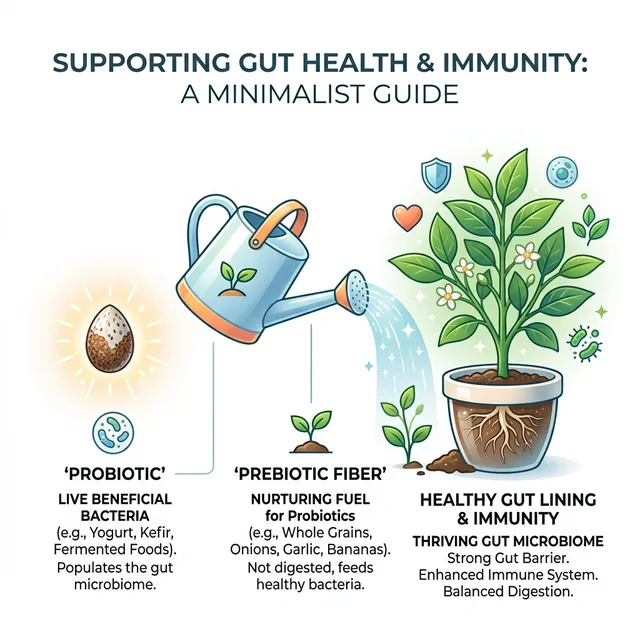
- Probiotics: These are the "Seeds." Strains like Lactobacillus and Bifidobacterium are the transient workers that help modulate the immune system and keep pathogenic bacteria in check.
- Prebiotics: These are the "Fertilizer." They are non-digestible carbohydrates (like Inulin, FOS, and GOS) that pass through the small intestine unchanged. When they reach the colon, your beneficial bacteria ferment them.
The Short-Chain Fatty Acid (SCFA) Mechanism
When your probiotics eat your prebiotics, they produce Short-Chain Fatty Acids, primarily Butyrate.
Butyrate is the primary energy source for the cells lining your colon (colonocytes). Without it, the gut lining becomes "leaky," leading to systemic inflammation—the very "inflammaging" we are trying to prevent in our longevity architecture.
The Gut-Brain Axis: Mood is a Metabolic Byproduct
The clinical relevance of fibre extends far beyond digestion. Approximately 95% of the body's serotonin is produced in the gastrointestinal tract.
If the gut environment becomes inflamed due to a lack of prebiotic substrate, the vagus nerve transmits distress signals directly to the central nervous system. This elucidates why individuals presenting with anxiety or attentional deficits frequently report significant improvements in baseline mood and cognition following the optimization of fermentable fibre intake. Modulating the gut is effectively optimizing the body's primary neuro-chemical factory.
Biohacking Your Labs: Measuring the Invisible
If you want to move beyond guesswork, Educational frameworks often suggest a Comprehensive Stool Analysis (PCR-based). We look for:
- Diversity Scores: How many different "species" are in your garden?
- Akkermansia Levels: A "keystone" strain that protects the gut lining. It loves polyphenols (like the ones in the Turmeric and Matcha we discussed).
- Secretory IgA: A marker of your gut’s immune "shield."
The Architect’s "Symbiotic" Protocol
To replicate the clinical results I see, you must use a Synbiotic approach—combining both elements.
1. The Seeds (Probiotics)
Don't just look for the highest CFU (Colony Forming Units). Look for strain specificity.
- For Mood/Focus: Lactobacillus helveticus and Bifidobacterium longum.
- For Immunity/Bloating: Lactobacillus rhamnosus GG.
Clinical Recommendation: Protocols typically utilize a multi-strain probiotic yielding 10–20 billion CFU, administered on an empty stomach 20 minutes prior to the first meal.
2. The Fertilizer (Prebiotics)
If you are new to this, start slow. Rapidly adding fibre can cause "The Bloat" as the bacteria throw a party they aren't prepared for.
- Soluble fibre: Psyllium husk, Inulin, or partially hydrolyzed guar gum (PHGG).
- Resistant Starch: Cooked and cooled potatoes or green bananas.
The Dosage: Aim for 30–40g of total fibre daily, but titrate up over 3 weeks.

Safety & Physician’s Cautions: The SIBO Exception
Clinical Red Flag: If the introduction of prebiotics or high-fibre foods exacerbates symptoms (e.g., extreme bloating, distension, or cognitive fatigue), this may indicate the presence of SIBO (Small Intestinal Bacterial Overgrowth).
In SIBO pathology, bacterial populations have abnormally migrated into the small intestine. In this scenario, administering fermentable fibre inadvertently "feeds" the overgrowth. Patients experiencing these symptoms should cease prebiotic supplementation and consult a healthcare provider for definitive breath testing.
Clinical Conclusion
The human body is vastly outnumbered by its microbial residents. Ignoring the metabolic requirements of this ecosystem ensures sub-optimal physiological function. True microbiome restoration requires moving beyond isolated probiotic strains and focusing on comprehensive ecosystem cultivation. Provide the correct substrates, and the microbiome will systematically support both immune resilience and neurological health.
Clinical Addendum: The Mitochondrial Connection
To fully understand the gravity of this protocol, we must look at the cellular level. Every biological function we've discussed ultimately relies on mitochondrial output. Mitochondria are the microscopic power plants inside your cells, responsible for converting the food you eat and the oxygen you breathe into ATP (Adenosine Triphosphate)—the universal energy currency of the human body.
When you experience symptoms like brain fog, chronic joint pain, or afternoon fatigue, traditional medicine often treats these as separate diseases. In longevity medicine, we view them as different downstream expressions of the exact same upstream problem: Sub-clinical Mitochondrial Dysfunction.
As we age, our mitochondria undergo structural decay. The phospholipid membranes that protect them become rigid, and they begin to leak free radicals (Reactive Oxygen Species) into the cell. This creates a state of chronic oxidative stress. Your immune system responds to this cellular damage by triggering systemic inflammation. This is the mechanism behind "Inflammaging"—the age-related increase in systemic inflammation that drives nearly every chronic disease.
Therefore, any protocol designed to optimize your healthspan must actively protect and regenerate these power plants. This is why the foundational pillars of our practice rely on specific interventions: Zone 2 Cardiovascular Training to force mitochondrial biogenesis (the creation of new mitochondria), Time-Restricted Eating to trigger mitophagy (the clearance of dead mitochondria), and targeted supplementation like NAD+ precursors and high-dose Omega-3s to provide the raw biological materials for cellular repair.
You cannot medicate your way out of mitochondrial dysfunction. You must systematically rebuild the architecture of your cells. This is the difference between simply masking symptoms and fundamentally improving the foundational markers of your biological age.
Clinical Addendum
This content is for educational and informational purposes only. It is not intended as medical advice and should not replace consultation with a qualified healthcare professional. Always consult your physician before starting any new supplement, diet, or exercise programme.