
By Dr. Gavin McAuley | EMPOWERVIDA
TL;DR
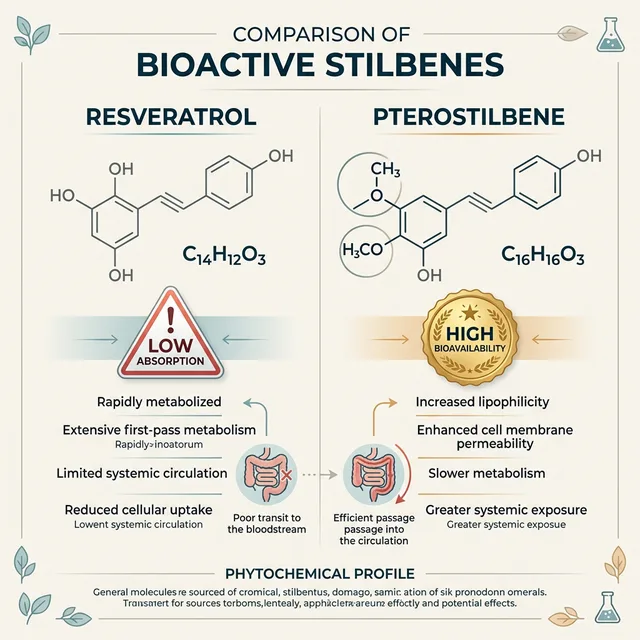
While Resveratrol is the most famous sirtuin activator, it suffers from poor absorption and rapid metabolism. Pterostilbene, a chemically similar compound found in blueberries, is nearly 80% bioavailable compared to Resveratrol’s 20%. Together, they act as "mimics" of caloric restriction, activating cellular repair pathways (SIRT1) that protect the heart and brain.
The Physician’s Observation: The "French Paradox" Revisited
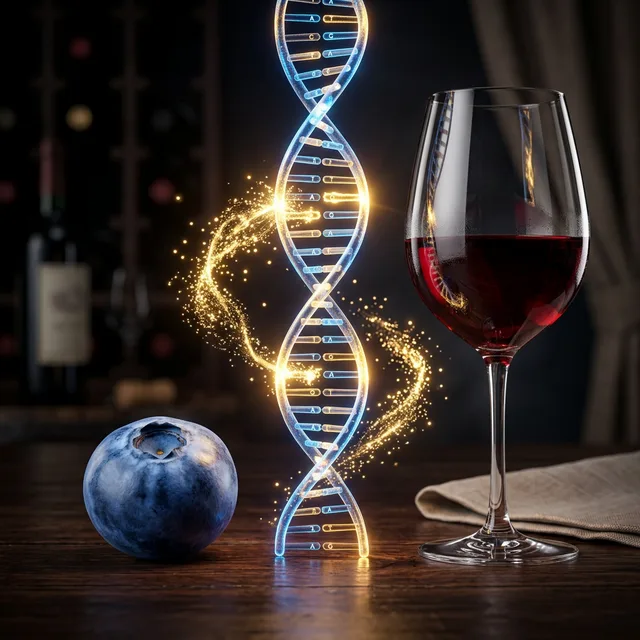
In medical school, we were taught about the "French Paradox"—the observation that the French have lower rates of cardiovascular disease despite a diet high in saturated fats, potentially due to the Resveratrol in red wine.
However, when I looked at the math as a clinician, I realised the paradox didn't add up. To get a therapeutic dose of Resveratrol used in clinical trials, you would need to drink hundreds of glasses of wine a day—a protocol I certainly wouldn't prescribe!
Personally, I moved away from "wine-based" longevity and toward targeted polyphenols. When I switched to a high-purity Pterostilbene protocol, I noticed a subtle but measurable improvement in my metabolic markers and afternoon cognitive endurance. It’s not a "buzz"; it’s a lack of "slump."
The Biochemistry: Methylation is the Difference
Resveratrol and Pterostilbene are both stilbenes, but Pterostilbene has a secret weapon: two methyl groups.
This minor structural change (methylation) makes Pterostilbene:
- More Lipophilic: It crosses cell membranes (and the blood-brain barrier) much easier.
- More Stable: The liver takes longer to break it down, giving it a much longer "half-life" in your system.
The SIRT1 Mechanism
Both compounds are thought to activate SIRT1, often called the "longevity gene." SIRT1 tells the cell to stop dividing and start repairing. It’s like a "General Contractor" that enters a building and decides to fix the plumbing and wiring instead of building a new floor.
Clinical Evidence: The Sinclair vs. Skepticism Debate
The seminal work of Dr. David Sinclair at Harvard put Resveratrol on the map, showing it could extend the lifespan of yeast, flies, and mice. But does it work in humans?
A significant study published in Cell Metabolism showed that Resveratrol could mimic the metabolic benefits of exercise and caloric restriction in obese men. However, other trials have been mixed, largely due to the "Resveratrol Bioavailability Trap."
This is where Pterostilbene shines in the research. A study in the Journal of Agricultural and Food Chemistry noted that Pterostilbene was significantly more effective at lowering oxidative stress in the brain compared to Resveratrol, largely because it actually reaches the brain tissue in meaningful amounts.
The Neuro-Protective Angle: Guarding the "Central Command"
in functional settings, functional approaches focus on "Brain-Span" as much as "Life-Span." Pterostilbene has shown promise in animal models for reducing neuro-inflammation and improving memory by increasing hippocampal plasticity.
As we age, our "neural wiring" gets frayed. By activating sirtuins, we are essentially "insulating" those wires. When I take my stilbene stack in the morning, I view it as a metabolic insurance policy for my prefrontal cortex.
Biohacking Your Labs: Tracking the Impact
How do you know if your sirtuin activators are working?
- hs-CRP (High-Sensitivity C-Reactive Protein): This is a marker of systemic inflammation. We want to see this drop.
- HbA1c: Pterostilbene has shown some ability to help regulate blood sugar—a key driver of ageing.
- Lipid Profile: Watch for improvements in LDL oxidation.
The Architect’s Stilbene Stack
To get the benefits of the "French Paradox" without the liver damage, follow this hierarchy:
- The Combo: Look for a supplement that contains both Resveratrol (for the gut/liver) and Pterostilbene (for the brain/systemic).
- The Trans-Form: Only use "Trans-Resveratrol." The "Cis" form is biologically inactive.
- The Dosage: Trans-Resveratrol: 500mg. Pterostilbene: 50–150mg.
- The Catalyst: Always take these with Quercetin or Fisetin to prevent the compounds from being "tagged" for excretion by the liver.
Safety & Physician’s Cautions
While these are powerful antioxidants, "more" is not always "better."
- Hormone Interference: Resveratrol can act as a weak phytoestrogen. If you have a history of oestrogen-sensitive cancers, consult your oncologist.
- The "Exercise Paradox": Some research suggests high-dose Resveratrol might actually blunt the positive adaptations to aerobic exercise.
The Physician’s Rule: Don’t take your stilbenes within 2 hours of a heavy workout. Let the natural inflammatory signal of exercise do its job first.
Final Physician’s Note
The longevity field is full of "breakthrough molecules," but as an architect of your own health, you must choose the one with the best "foundation." Resveratrol started the fire, but Pterostilbene is the fuel that actually keeps the engine running. Pair them wisely, take them with fat, and don't forget the blueberries.
Medical Disclaimer
This information is for educational purposes and does not constitute medical advice. Consult your physician before starting any new supplement regimen, particularly if you have existing medical conditions or take prescription medications.