Standard medicine asks: "Are you eating vegetables?"
Longevity medicine asks: "Are you manipulating mTOR and AMPK signaling to trigger autophagy?"
This is evidence-based, proactive medicine. The goal is not just to live longer. It's to extend your healthspan: the years you remain vital, cognitively sharp, and physically capable.
Below are the 5 Pillars that form the foundation of longevity medicine: the framework I use in my clinical education to support patients in optimising their healthspan.
Pillar 1: Nutritional Biochemistry
Not Just "Diet"—Pathway Manipulation
Standard medicine asks if you're eating vegetables. Longevity medicine asks if you're manipulating mTOR and AMPK signaling to trigger cellular cleanup.
The Focus:
- Energy Balance: Preventing insulin resistance and metabolic dysfunction
- Protein Synthesis: Maintaining muscle mass to prevent sarcopenia (age-related muscle loss)
- Autophagy Activation: Using Time-Restricted Feeding (TRF) to trigger cellular recycling
Physician's Note:
The goal is not calorie restriction. It's nutrient timing. We use fasting windows (12-16 hours) to downregulate mTOR and activate AMPK, which signals the cell to "clean house" via autophagy.
Pillar 2: Exercise Physiology
The Most Potent Drug
Exercise is widely regarded as one of the most effective interventions for supporting longevity.
The Four Subdivisions:
1. Zone 2 Training
For mitochondrial efficiency and metabolic base. This is the "conversational pace" cardio that builds your aerobic engine.
2. Strength/Hypertrophy
To protect against frailty and serve as a "glucose sink." Muscle is the organ of longevity. It buffers blood sugar and prevents insulin resistance.
3. VO2 Max
The strongest correlate to mortality risk. Higher VO2 max = lower all-cause mortality. This requires high-intensity interval training (HIIT).
4. Stability
The often-ignored foundation to prevent falls in late life. Balance, proprioception, and mobility work are non-negotiable.
Pillar 3: Sleep Physiology
The Repair Shop
This is not just "rest." Sleep is when the glymphatic system scrubs neurotoxins (amyloid and tau proteins) from the brain.
The Metric: Sleep Architecture
We look at the ratio of Deep Sleep (physical repair) to REM Sleep (emotional/cognitive repair). Both are essential. You can't sacrifice one for the other.
What We Optimise:
- Sleep Latency: How quickly you fall asleep (should be <15 minutes)
- Sleep Efficiency: Percentage of time in bed actually asleep (target: >85%)
- Deep Sleep %: Should be 15-20% of total sleep time
- REM Sleep %: Should be 20-25% of total sleep time
Pillar 4: Distress Tolerance
The Cortisol Connection
You can have perfect labs, but if your sympathetic nervous system is chronically activated in "fight or flight," elevated cortisol may compromise insulin sensitivity and gut barrier integrity.
The Goal: Autonomic Resilience
Building resilience and regulating the autonomic nervous system. We measure this via Heart Rate Variability (HRV)—the higher, the better.
The Interventions:
- HRV Training: Using biofeedback to increase vagal tone
- Breathwork: Box breathing, 4-7-8 breathing to activate parasympathetic response
- Adaptogens: Rhodiola, Ashwagandha to modulate cortisol
- Cold Exposure: Deliberate cold stress to build resilience
Pillar 5: Exogenous Molecules
The "Architect's" Domain
This pillar acknowledges that even a well-optimised lifestyle may benefit from additional support to maximise healthspan potential.
The Tools:
Targeted Supplementation
Our Mitochondrial Stack:
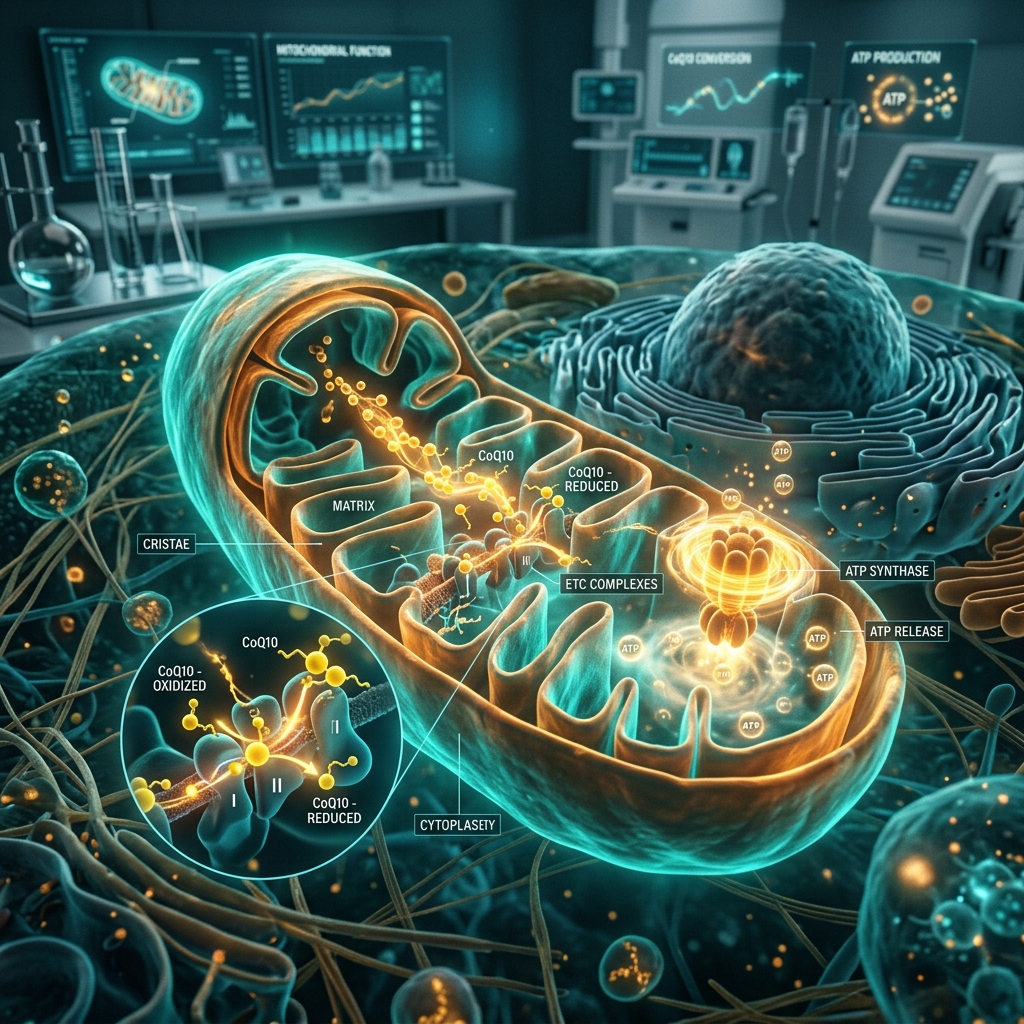
- Urolithin A: Triggers mitophagy (recycling of old mitochondria)
- Bio-Fisetin: Senolytic for clearing "zombie" cells that drive inflammation
- NAC: Glutathione precursor for antioxidant defense
- Glycine: Supports collagen synthesis and glutathione production
- NAD+ Precursors: For DNA repair and sirtuin activation
- PQQ: Triggers mitochondrial biogenesis
Pharmaceutical Interventions
Where clinically appropriate:
- Rapamycin: mTOR inhibitor for autophagy activation
- Metformin: AMPK activator for metabolic health
- GLP-1 Agonists: For metabolic optimization (when indicated)
Important: These are prescription medications used off-label in longevity contexts. They should only be considered under direct physician supervision with appropriate monitoring. This information is for educational purposes only and does not constitute a recommendation.
The Framework, Not the Finish Line
These 5 pillars are not a checklist. They're a living framework. Longevity medicine is precision medicine. It requires measurement, iteration, and clinical oversight.
The goal is not just to add years to your life. It's to add life to your years.