
Educational Perspective
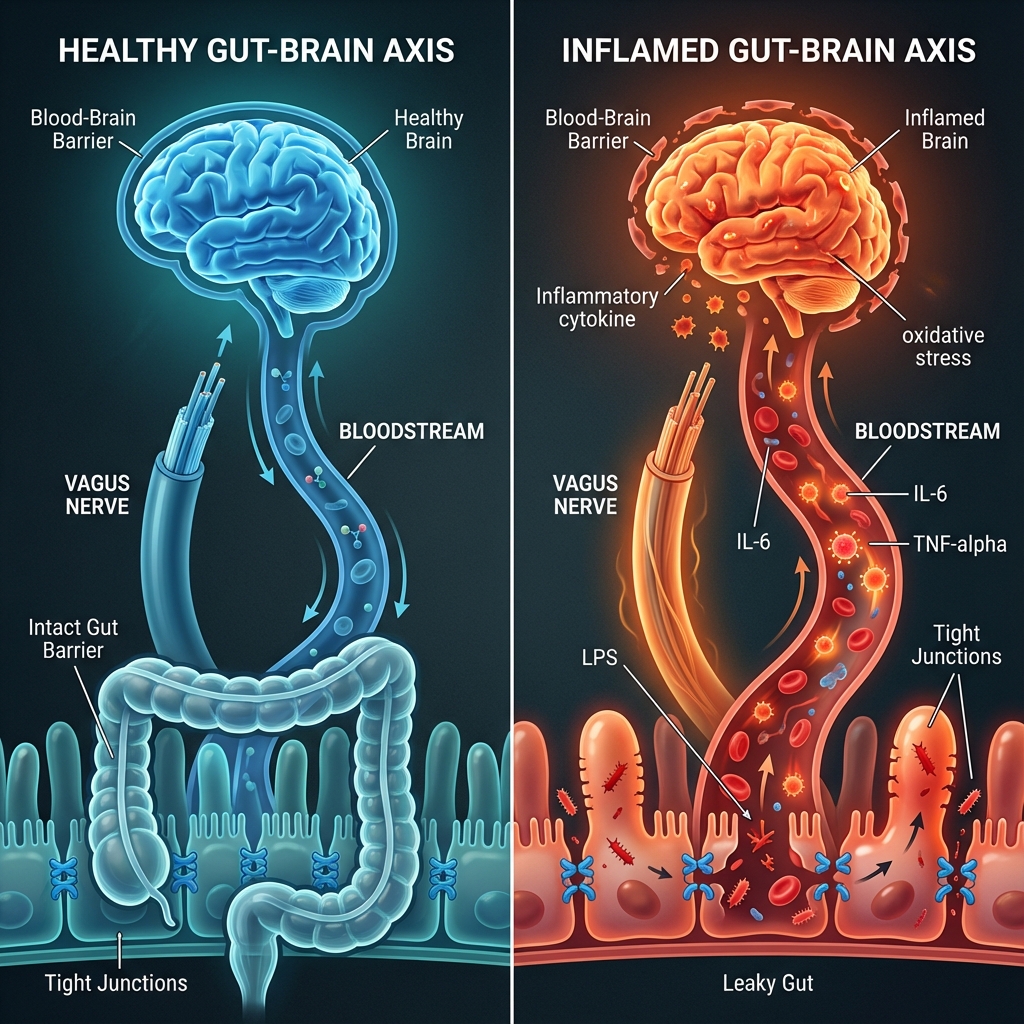
It is increasingly recognized in functional contexts that symptoms like fatigue, joint discomfort, brain fog, anxiety, and digestive issues may not exist in silos. Often, a comprehensive assessment reveals underlying factors such as a compromised gut barrier and dysbiosis. Understanding the connection between the gastrointestinal system and systemic health can provide a broader framework for approaching these complex presentations.
The short answer: Your gut lining is one cell thick. When it breaks, bacterial toxins flood your bloodstream and trigger anxiety, depression, joint pain, and brain fog. Not five diseases. One broken barrier.
The One Cell Barrier
Your intestinal lining is one cell thick. That's it. One microscopic layer separating the outside world (food, bacteria, toxins) from your bloodstream.
These cells are held together by tight junctions, protein "zippers" that control what gets through. When the zippers break, you get intestinal permeability (often called "Leaky Gut").
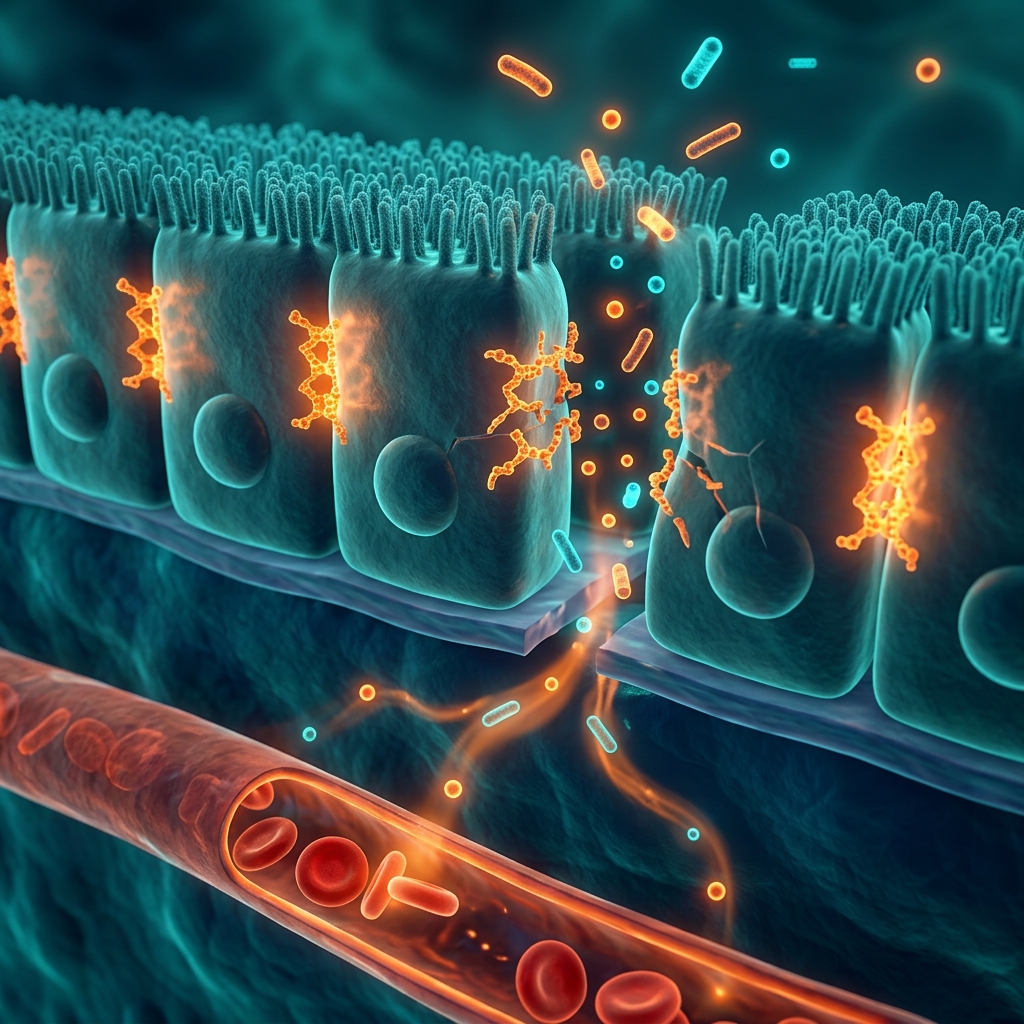
When the barrier breaks, three catastrophic things happen:
- Bacterial fragments (LPS) enter your bloodstream. Your immune system sees these as invaders and launches a systemic attack.
- Inflammatory cytokines flood your system. IL-6, TNF-alpha, IL-1 beta. These are the molecular signals of war, driving deep joint pain and fatigue.
- The blood-brain barrier breaks. Systemic inflammation crosses into your brain, triggering neuro-inflammation. The clinical presentation? Severe anxiety, depression, and brain fog.
This is exactly why your psychiatrist cannot fix your anxiety with SSRIs alone. The core problem isn't a serotonin deficiency. It's systemic neuro-inflammation driven by a broken gut.
What Breaks the Barrier
The modern assault on your gut is relentless:
- Frequent use of certain medications: Overuse of NSAIDs (like ibuprofen) can sometimes contribute to increased intestinal permeability. It's important to discuss pain management strategies with a healthcare provider.
- Chronic stress: Elevated cortisol is associated with changes in zonulin levels, a protein that regulates tight junctions.
- Antibiotics: While crucial medical tools, broad-spectrum antibiotics can alter the microbiome balance.
- Ultra-processed food: Industrial emulsifiers, artificial sweeteners, and industrial seed oils may impact the integrity of tight junctions in some individuals.
The Vagus Nerve: The Biological Highway
The connection between your gut and your brain isn't just chemical; it's physical. The Vagus Nerve acts as a massive biological superhighway connecting the enteric nervous system (your gut) directly to your brainstem. It is the longest cranial nerve in the body.
Historically, medicine believed the brain sent commands down the Vagus Nerve to control digestion. We now know that 80% of the traffic on the Vagus Nerve is traveling UP. Your microbiome is constantly sending telemetry data to your brain. If your gut is inflamed due to dysbiosis (an overgrowth of pathogenic bacteria), the Vagus Nerve transmits that distress signal directly into your central nervous system.
The brain interprets this chronic distress signal as systemic danger, which clinically presents as generalized anxiety. You feel anxious, but there is no psychological trigger. The trigger is entirely biological.
The Role of Butyrate: Sealing the Leaks
So how do we fix it? The key lies in Short-Chain Fatty Acids (SCFAs), specifically Butyrate. Butyrate is a byproduct created when the "good" bacteria in your gut ferment dietary fiber.
Butyrate is the primary fuel source for the cells lining your colon (colonocytes). When these cells have abundant butyrate, they replicate rapidly and maintain incredibly tight junctions. When you consume a modern diet devoid of diverse plant fibers, butyrate production plummets. The colonocytes starve, the tight junctions open, and the barrier fails.
A Framework for Support
When the focus shifts to supporting the intestinal barrier and optimizing Vagal tone, many individuals notice a broad shift in their well-being. A common educational framework suggests that addressing structural integrity may have systemic benefits.
This approach recognizes that inflammation is often a signal rather than the origin of the issue. Supporting gut health provides a foundational strategy for those exploring ways to promote long-term vitality.
An Educational Framework
Many functional approaches utilize a multi-step framework to support intestinal barrier integrity.
- Phase 1: Addressing Stressors: This often involves evaluating the use of certain medications with a doctor, minimizing ultra-processed foods, and exploring stress management techniques like Zone 2 training and breathwork.
- Phase 2: Supporting Architecture: Supplying the body with nutrients that are often studied for their role in gut health, such as L-Glutamine, Zinc Carnosine, and high-quality Collagen Peptides.
- Phase 3: Managing Inflammation: Incorporating supportive nutrients like Curcumin and Omega-3s as part of a broader strategy to manage systemic inflammatory loads.
Clinical Addendum: Systemic Inflammation & Longevity
A critical component of this physiological mechanism is the role of systemic inflammation. In acute scenarios—such as a sprained ankle or a viral infection—inflammation is a life-saving biological response. Your immune system deploys white blood cells and cytokines to the site of injury to isolate the damage and initiate repair. Once the threat is neutralized, the inflammation subsides.
However, the modern lifestyle has hijacked this system. Due to diets high in ultra-processed foods, chronic psychological stress, sleep deprivation, and environmental factors, our immune systems are often locked in a state of perpetual high-alert. This is known as chronic, low-grade systemic inflammation.
Unlike acute inflammation, this chronic state is silent and destructive. It doesn't cause a fever or a swollen joint immediately; instead, it slowly degrades tissue architecture over decades. Circulating inflammatory cytokines physically damage the endothelial lining of your blood vessels and cross the blood-brain barrier, driving the neuro-inflammation that manifests as severe brain fog and cognitive fatigue.
To support optimal healthspan, we must aggressively manage this slow-burning fire. This requires a comprehensive approach to "Inflammaging." It means managing blood glucose levels, optimizing your circadian rhythm to ensure restorative sleep, and utilizing targeted nutritional interventions to interrupt the inflammatory cascades at the molecular level. Your long-term cognitive health is inextricably linked to how well you manage your systemic inflammatory load. You can learn more about our foundational approach to cognitive resilience in The High-DHA Neuro Protocol.
Medical Disclaimer
This information is for educational purposes and does not constitute medical advice. Consult your physician before starting any new supplement regimen, particularly if you have existing medical conditions or take prescription medications.