

Educational Perspective
It is common for high-performing individuals to report sleeping 8 hours a night, yet waking up feeling exhausted and unable to focus without caffeine. These symptoms are sometimes dismissed as "normal aging" or "just stress." However, that heavy, muddy feeling in the head may not just be "tiredness." It can relate to the physical accumulation of metabolic byproducts. Here is an exploration of the physiology of cognitive fatigue and the mechanisms the brain uses to clear waste.
The short answer: Brain fog isn't a personality trait or an inevitable symptom of aging. It's a biological waste clearance issue. Your brain has a highly specialized plumbing system that only turns on during deep, slow-wave sleep. If you don't achieve that specific stage of sleep, the sewage accumulates.
The Dirty Kitchen Analogy
Imagine hosting a massive dinner party for 100 guests. There is music, food, and loud conversation all night. By 2:00 AM, the guests finally leave, and your kitchen is an absolute disaster. Plates are piled high, wine is spilled on the floor, and trash is overflowing.
Now, imagine you simply turn off the lights and go to sleep without cleaning a single thing.
When you wake up the next morning to cook breakfast, you're working in a filthy kitchen. You're sluggish. You can't find your tools. Every surface is sticky and contaminated. Everything takes twice as long.
This is exactly what is happening inside your skull when you experience brain fog. During the day, your neurons burn massive amounts of energy (ATP), producing toxic byproducts like Amyloid-beta and Tau proteins.
The Glymphatic System: Your Brain's Power Washer
For decades, neurologists didn't actually know how the brain cleaned itself. The rest of your body uses the lymphatic system (lymph nodes) to clear waste, but the brain is sealed off behind the blood-brain barrier.
Then, in 2012, researchers made a Nobel-level discovery: the Glymphatic System. This is a high-pressure plumbing network that literally pumps cerebrospinal fluid (CSF) straight through your brain tissue to power-wash the metabolic waste away.
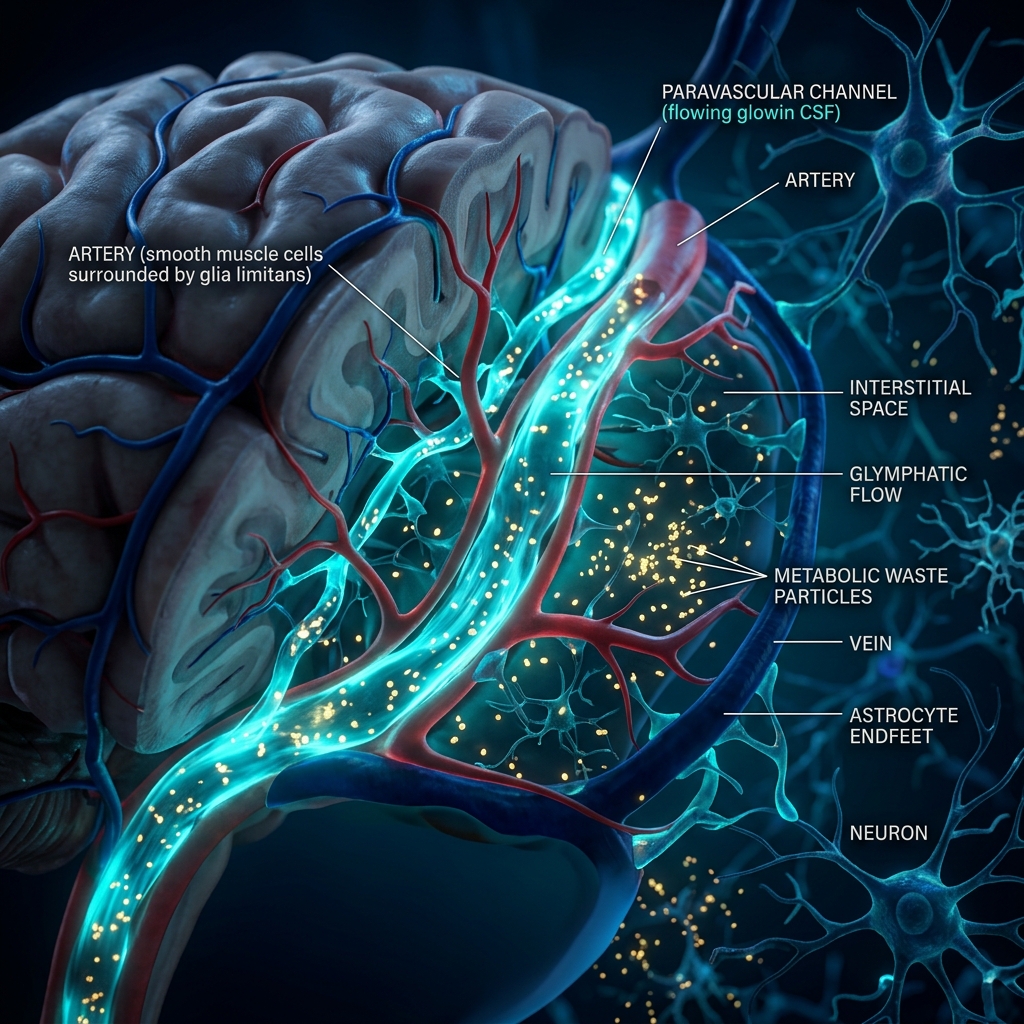
But here is the critical catch: The glymphatic system only activates during Deep (Slow-Wave) Sleep. During this phase, your brain cells physically shrink by up to 20%, opening up the paravascular channels so the fluid can rush in.
If you are in bed for 8 hours but rely on a glass of wine, prescription sleeping pills, or scrolling your phone to "pass out," your brain stays trapped in light sleep stages. You are technically unconscious, but the dishwasher never actually turned on. You wake up intoxicated by your own cellular sewage.
How Alcohol Sabotages the Flush
The most common mistake I see among high-stress executives is the "nightcap." Alcohol is a powerful central nervous system depressant. It will knock you unconscious quickly, giving the illusion of sleep. However, alcohol completely fragments your sleep architecture. It suppresses REM sleep and drastically reduces the amount of time spent in deep, slow-wave sleep.
Because you never hit the deep sleep threshold, the glymphatic system remains largely inactive. The Amyloid-beta proteins—the exact same proteins implicated in Alzheimer's disease—are left to stagnate in the interstitial fluid. That groggy, heavy feeling the morning after a few drinks isn't just dehydration; it is the physical presence of neurotoxic waste that failed to clear.
The Role of Tau Proteins
It's not just Amyloid-beta. Tau proteins are another metabolic byproduct that the glymphatic system is responsible for clearing. In a healthy brain, Tau proteins stabilize the internal structure of neurons. But when damaged or excessive, they detach and clump together, forming neurofibrillary tangles. Chronic sleep deprivation means chronic accumulation of these tangles, directly linking poor sleep hygiene to long-term cognitive decline.
An Educational Framework
Relying solely on caffeine may not address the root mechanisms of cognitive fatigue. Supporting deep sleep to activate the glymphatic system often involves a multi-step approach:
- Structural Positioning: Sleep position can influence fluid dynamics. Research in the Journal of Neuroscience suggests the glymphatic system may be more efficient when sleeping on the side (lateral decubitus position) compared to the back or stomach.
- Thermal Signaling: The body typically needs a core temperature drop to enter deep sleep. Maintaining a cool bedroom environment (e.g., 18°C / 65°F) is a common strategy. Some longevity protocols also explore amino acids like Glycine for this purpose.
- Neurological Braking (The Sleep Stack): Many over-the-counter magnesium supplements (like oxide or citrate) are poorly absorbed. To support relaxation and the transition into sleep, bioavailable forms like Magnesium Bisglycinate are often favored in functional protocols for their ability to support GABA pathways.
Educational Addendum: The Architecture of Sleep
Many interventions may be limited in their effectiveness if the foundation of sleep architecture is not supported. It is common to see individuals investing heavily in advanced therapies while remaining chronically sleep-deprived. Foundational sleep habits are crucial.
Sleep is not a passive state of unconsciousness. It is a highly active, metabolically demanding period of systemic repair. During the initial stages of deep, slow-wave (Delta) sleep, your pituitary gland releases massive surges of Human Growth Hormone (HGH), which is responsible for repairing muscle tissue, strengthening bones, and mobilizing stored fat. Simultaneously, your brain physically shrinks to allow cerebrospinal fluid to power-wash metabolic waste away through the glymphatic system.
During the later stages of REM sleep, your brain consolidates memories, processes emotional trauma, and rebuilds the synaptic networks required for learning and neuroplasticity. When you cut your sleep short by even 90 minutes, you disproportionately rob your brain of this critical REM phase.
Most adults are not actually sleeping; they are simply sedated. Alcohol, prescription sleep aids, and chronic stress fragment your sleep architecture, preventing you from ever reaching these restorative stages. To support healthy biological aging, you must treat sleep as a clinical intervention. This means respecting your circadian biology: viewing morning sunlight to set your cortisol rhythm, avoiding blue light 90 minutes before bed, dropping your core body temperature, and utilizing targeted compounds like Magnesium Bisglycinate to facilitate the transition into deep sleep.
Medical Disclaimer
This information is for educational purposes and does not constitute medical advice. Consult your physician before starting any new supplement regimen, particularly if you have existing medical conditions or take prescription medications.