
Educational Perspective
Magnesium deficiency is a widespread issue, often exacerbated by soil depletion, chronic stress, and modern diets. While many individuals use over-the-counter magnesium supplements (like Oxide or Citrate), these forms are often poorly absorbed and function primarily in the gut. For those interested in supporting cognitive function and sleep architecture, understanding the bioavailability of different magnesium forms is crucial. This article explores a specific molecule engineered to cross the blood-brain barrier.
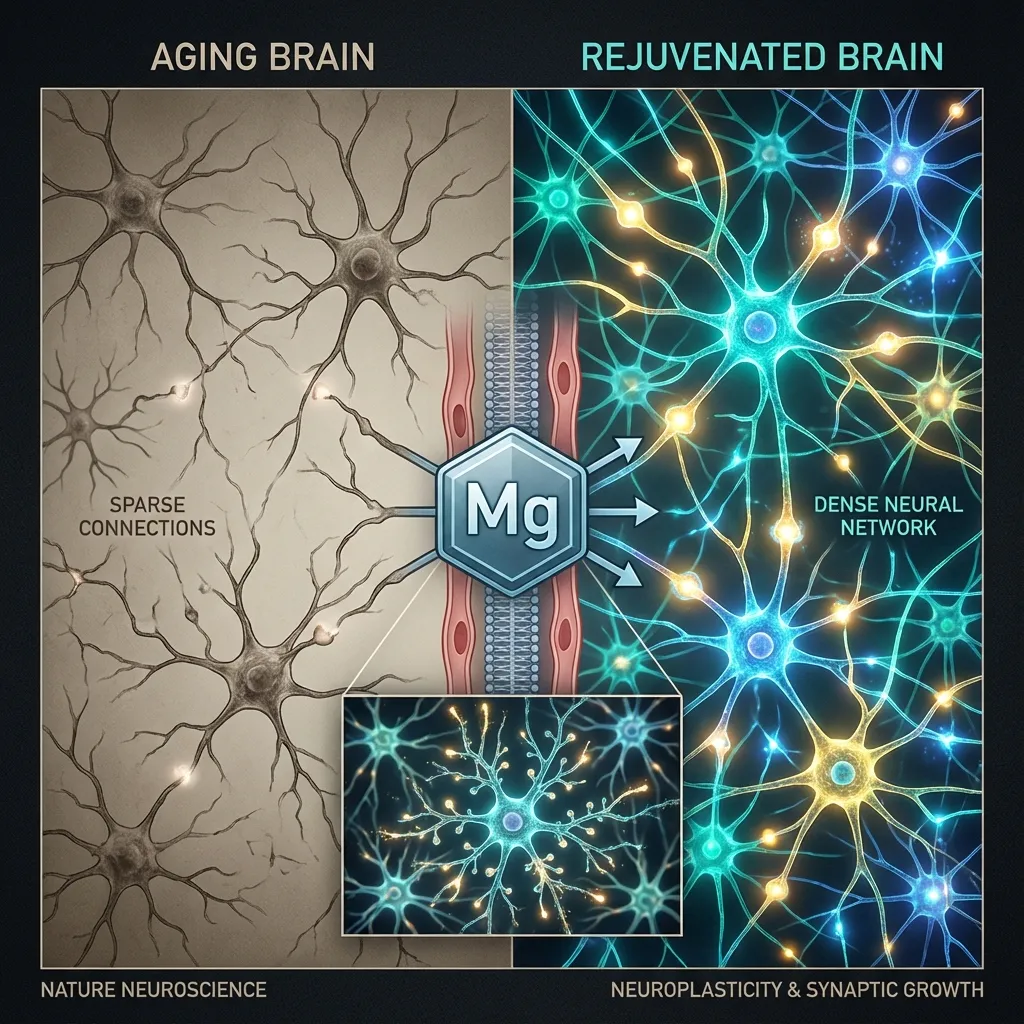
The short answer: The blood-brain barrier prevents 90% of standard magnesium supplements from ever touching a neuron. In 2010, MIT neuroscientists engineered Magnesium L-Threonate (Magtein)—a proprietary form specifically designed to breach this barrier. Clinical trials demonstrate that this specific molecule increases synaptic density by 44% in aging brains and can improve cognitive age markers by up to 9.4 years.
The Anatomy of Synaptic Decay
To understand why this discovery is so revolutionary, we first need to understand how the brain ages. Cognitive decline, forgetfulness, and chronic brain fog are not simply byproducts of "getting older." They are the direct result of physical, structural decay occurring inside your skull.
Your brain cells (neurons) communicate via synapses. The physical structures that reach out to form these connections are called dendritic spines. In a young, healthy brain, these spines are dense, highly active, and constantly forming new connections—a process known as neuroplasticity. This is what makes learning effortless and memory recall instant.
However, the maintenance of these dendritic spines requires massive amounts of intracellular magnesium. When systemic magnesium levels drop—as they inevitably do in modern adults—the brain begins a process of "synaptic pruning." It sacrifices these connections to conserve energy. The physical density of your neural network shrinks. Words get stuck on the tip of your tongue, learning new skills feels exhausting, and the afternoon brain fog becomes your new normal.
The Blood-Brain Barrier Problem
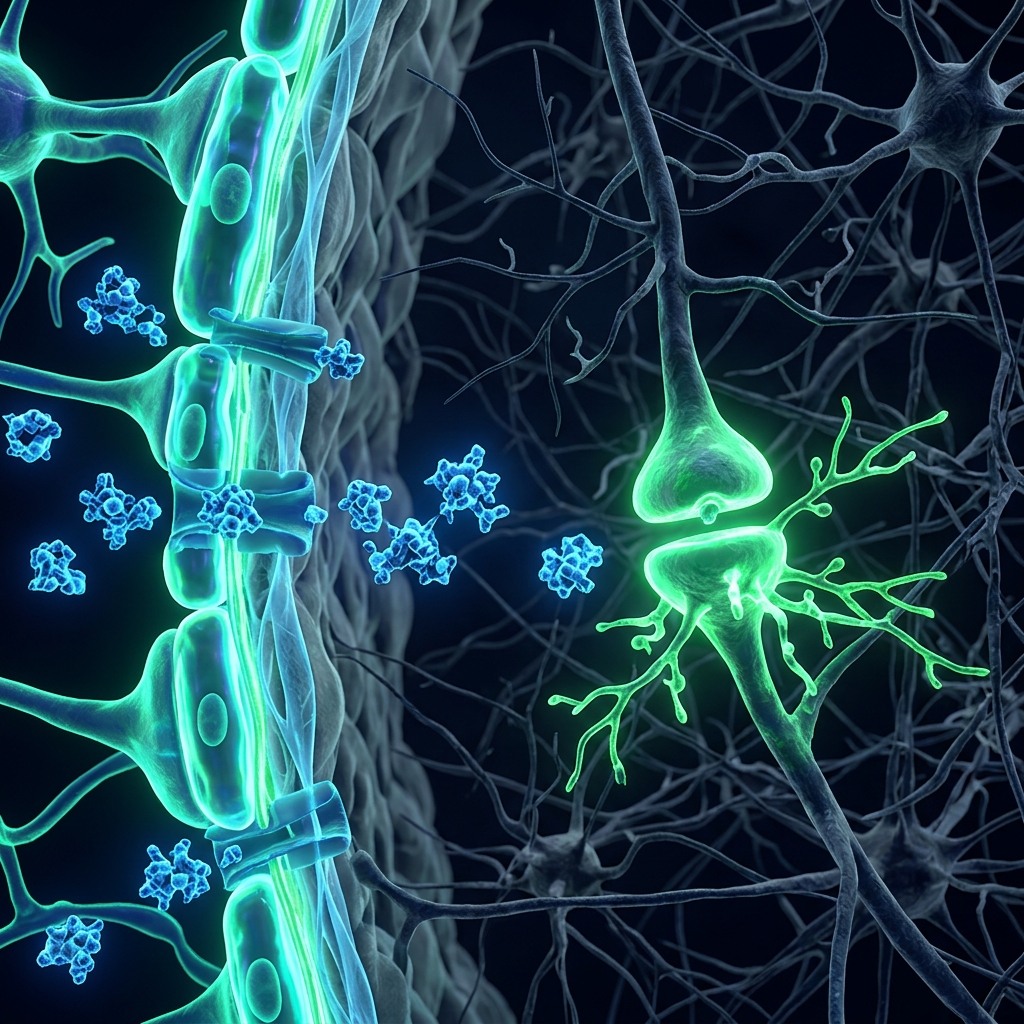
The logical solution would be to simply consume more magnesium. But human biology is incredibly stubborn. Your central nervous system is heavily fortified by the Blood-Brain Barrier (BBB)—a highly selective, semi-permeable border designed to protect your brain from circulating toxins and pathogens.
While the BBB is excellent at keeping threats out, it also blocks many beneficial nutrients, including standard forms of elemental magnesium. When you swallow a standard Magnesium Citrate or Oxide pill, the absorption bottleneck occurs in the gut. These forms pull water into the intestines (causing the infamous laxative effect) and are rapidly excreted. Even highly bioavailable forms like Magnesium Glycinate, which are excellent for muscle relaxation and systemic calming, struggle to meaningfully penetrate the cerebrospinal fluid.
Your muscles might feel relaxed, and your digestion might improve, but your brain magnesium levels remain entirely unchanged. Your neurons continue to starve, and synaptic decay progresses uninterrupted.
The MIT Discovery: Engineering a Molecular Key
In 2010, a team of pioneering neuroscientists at the Massachusetts Institute of Technology (MIT), led by Dr. Guosong Liu, tackled this exact biological bottleneck. They understood that if they could physically force magnesium across the BBB, they could theoretically halt synaptic pruning.
Through extensive molecular engineering, they discovered a unique mechanism. By binding elemental magnesium to L-Threonate—a specific metabolite of Vitamin C—they created a molecule that the Blood-Brain Barrier recognized and actively transported across the threshold. The L-Threonate acted as a molecular "Trojan Horse," successfully smuggling the magnesium directly into the cerebrospinal fluid.
The preclinical results were staggering. In their initial animal models, Magnesium L-Threonate (which they patented as Magtein®) increased actual brain magnesium levels by 15%. But the structural change was what shocked the neuroscience community: they observed a 44% increase in synaptic density in the aging models. The brains were structurally rejuvenating.
The Human Clinical Trials: Improving Cognitive Metrics by 9 Years
Animal models are compelling, but human data is the gold standard of clinical architecture. In 2016, a landmark randomized, double-blind, placebo-controlled trial was published in the Journal of Alzheimer's Disease. The study followed older adults with cognitive impairment over a 12-week period.
The participants were administered the MIT-patented Magnesium L-Threonate. The researchers tracked multiple domains of cognitive function: executive function, working memory, attention, and episodic memory.
The findings confirmed the MIT team's hypothesis. Participants supplementing with L-Threonate demonstrated significant improvements across nearly all cognitive domains. But the most profound metric was the calculation of biological brain age. Based on the improvements in cognitive testing, the researchers concluded that the participants' cognitive performance improved to match that of individuals 9.4 years younger in just 12 weeks.
By delivering magnesium directly to the synapses, the brain was able to rapidly rebuild the dendritic spines that had been pruned away by decades of nutritional deficiency and stress.
An Educational Framework
Functional approaches often explore a targeted, dual-pathway method for magnesium support, utilizing L-Threonate for cognitive applications and Bisglycinate for nervous system support. Here is an overview of how these forms are typically structured:
- Morning Cognitive Support: Protocols often utilize 2,000mg of Magnesium L-Threonate (yielding approximately 144mg of elemental magnesium) in the morning. Research suggests its ability to cross the BBB may help support synaptic plasticity and working memory.
- Evening Nervous System Braking: Functional guidelines frequently suggest 400mg of Magnesium Bisglycinate 60 to 90 minutes before bed. This form is chosen for its potential to support GABA receptors in the peripheral nervous system, encouraging relaxation and sleep onset.
- Dietary Foundation: Supplementation is intended to complement, not replace, nutrition. Limiting highly processed sugars and incorporating high-magnesium foods (like pumpkin seeds, dark leafy greens, and almonds) provides a crucial foundational base.
Medical Disclaimer
This educational framework is provided for informational purposes and does not constitute medical advice. Consult your primary care physician before initiating any new supplement protocol, particularly if you have renal impairment (kidney disease) or take prescription medications such as blood pressure regulators or antibiotics.