
By Dr. Gavin | EMPOWERVIDA
TL;DR
"Caramelizing" (Glycation) is why some people age faster. Sugar binds to proteins, forming AGEs (Advanced Glycation End-products) that stiffen collagen and damage DNA. Fix: Low-glycemic diet, Carnosine (glycation inhibitor), and Benfotiamine (blocks AGE formation).
We all know that one person from high school. You see them at the reunion 20 years later, and they haven't aged a day. Meanwhile, another classmate looks like they have aged 40 years.
Why? Is it just "good genetics"?
Rarely. As a physician, when I look at accelerated ageing, I don't just see "bad luck." I see Glycation.
The Medical Reality: You Are "Cooking" Your Organs
If you put a chicken in the oven, the skin turns brown and crispy. This is called the Maillard Reaction. It happens when sugar binds to protein under heat.
Here is the scary part: This exact same process happens inside your body.
When your blood sugar is chronically high (from pasta, bread, soda, or stress), glucose molecules bind to the proteins in your skin (collagen), your blood vessels, and your organs.
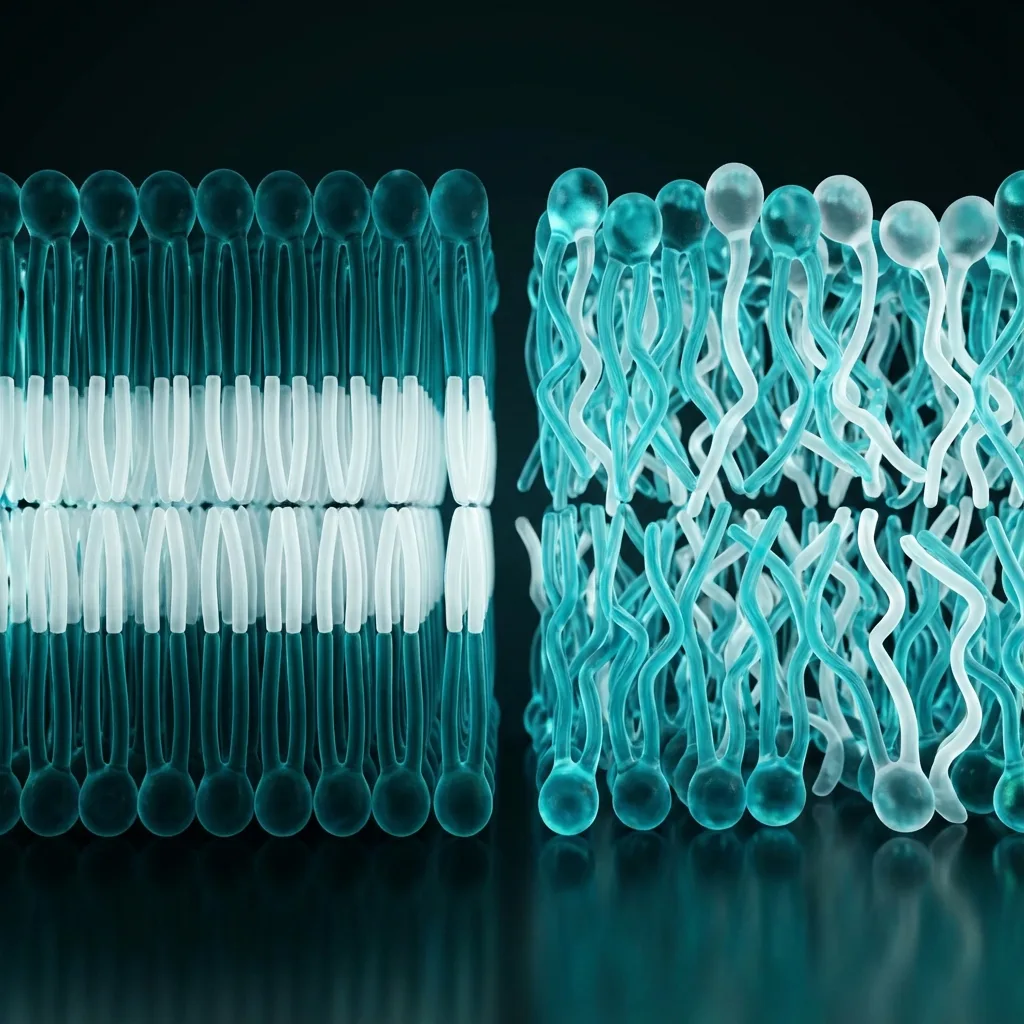
They form sticky, rigid structures called AGEs (Advanced Glycation End-products).
- In your skin: AGEs break collagen, causing deep wrinkles and sagging.
- In your joints: AGEs make cartilage stiff, leading to that "old person" immobility.
- In your blood: AGEs stiffen your arteries, driving up blood pressure.
If you feel "stiff" and look "tired," you aren't just ageing. You are slowly caramelizing.
The Root Cause: The Insulin Rollercoaster
You don't need to be diabetic to suffer from this. You just need to be Insulin Resistant.
In a healthy body, you eat carbs, insulin rises, and your cells open up to absorb the energy. In a resistant body (which is >50% of adults), your cells slam the door. The sugar stays in your blood, roaming around and damageing proteins.
You feel tired after meals. You crave sugar at 3 PM. You carry stubborn weight around your belly. These are the warning signs.
Patients suffering from undiagnosed insulin resistance are often experiencing accelerated glycation daily without realizing it. A standard diet built around refined carbohydrates frequently results in chronic joint stiffness, premature skin aging, and systemic fatigue. When patients eliminate excess carbohydrates and transition towards metabolic flexibility through interventions like intermittent fasting, the transformation extends far beyond weight loss. Joint mobility improves, systemic inflammation markers drop, and cognitive clarity returns. This is the physiological result of halting the ongoing glycation of structural proteins like collagen.
The Solution: The "Longevity Switch" (AMPK)
To stop glycation, we need to sensitize your cells to insulin again. We need to activate an enzyme called AMPK.
Think of AMPK as your body's "Master Switch." When you flip it on, your body stops storing fat and starts burning energy. It cleans house.
Fasting triggers AMPK. Exercise triggers AMPK. But there is also a compound used in traditional medicine for 3,000 years that mimics this effect.
The Protocol: Berberine
The media calls it "Nature's Ozempic." I call it a metabolic reset.
Berberine is a yellow compound extracted from the Oregon Grape plant.
The Mechanism: It activates AMPK, forcing your cells to suck up glucose from the bloodstream.
The Data: A study in Metabolism showed that Berberine lowered blood sugar and HbA1c (a marker of glycation) as effectively as the drug Metformin, but without the pharmaceutical side effects.
The Result: Less floating sugar. Less caramelization. Slower ageing.

THE TAKEAWAY
You can spend thousands on face creams to fix the wrinkles on the outside. But if your blood sugar is "cooking" your collagen from the inside, you are fighting a losing battle.
Stop the caramelization. Flip the metabolic switch.
TOOL: The Absorption Problem
Standard Berberine has poor bioavailability (your gut struggles to absorb it). I only recommend Berberine Phytosome (bound to lipids) or Dihydroberberine, which are up to 5x more absorbable.
The Biomarker You Already Have: HbA1c
Here is the elegant irony: the blood test your GP already orders to monitor diabetes is itself a glycation measurement. HbA1c (glycated haemoglobin) measures the percentage of your red blood cells' haemoglobin that has been "caramelised" by glucose over the past 90 days. A "normal" HbA1c of 5.6% means 5.6% of your haemoglobin is glycated. But "normal" and "optimal" are not the same thing.
Functional approaches often target an HbA1c below 5.0% in my longevity patients. Every 0.1% reduction represents meaningfully less glycation occurring across your entire body: your skin, your brain, your coronary arteries, your kidneys. The difference between 5.5% and 5.0% is the difference between a body that is slowly caramelising and one that is not.
The RAGE Receptor: When AGEs Turn Inflammatory
Glycation does not just stiffen your tissues. Once AGEs accumulate, they bind to a receptor on cell surfaces called RAGE (Receptor for Advanced Glycation End-products). When RAGE is activated, it triggers NF-kB, the master inflammatory pathway. This creates a vicious cycle: high blood sugar produces AGEs, AGEs activate RAGE, RAGE triggers chronic inflammation, and chronic inflammation drives insulin resistance, which raises blood sugar further. It is a self-reinforcing loop that accelerates ageing exponentially with each passing year.
This is why glycation is not just a cosmetic problem. It is the biochemical link between metabolic dysfunction and virtually every age-related disease: Alzheimer's (AGEs accumulate in amyloid plaques), cardiovascular disease (AGEs stiffen and narrow arteries), kidney disease (AGEs destroy the delicate filtration membranes), and cataracts (AGEs crosslink the crystallin proteins in your lens).
Clinical Observation
In standard practice, an HbA1c of 6.2% is often dismissed as "borderline" with the vague advice to just "watch it." However, from a longevity perspective, this indicates active and accelerating glycation. When individuals presenting with "borderline" HbA1c, chronic joint stiffness, and accelerated skin aging adopt a comprehensive anti-glycation approach—eliminating liquid sugars, walking after meals, and incorporating AMPK activators like Berberine Phytosome alongside Carnosine—it is common to observe a meaningful downward trend in HbA1c. As these metabolic markers improve, individuals frequently report a corresponding reduction in joint stiffness and an improvement in overall vitality, demonstrating the profound systemic impact of halting the glycation process.
An Educational Framework
- Test: Request HbA1c and fasting insulin from your GP. Target HbA1c below 5.0% and fasting insulin below 6 mIU/L. These two markers together reveal the full glycation picture.
- Diet first: Eliminate liquid sugar. Eat protein and fat before carbohydrates at every meal (reduces glucose spikes by up to 73%). Walk for 10 minutes after meals. This alone drops HbA1c by 0.5-1.0% in three months.
- Stack: Berberine Phytosome 500mg twice daily (AMPK activator), Carnosine 500mg daily (direct AGE inhibitor), and Alpha-Lipoic Acid 300mg (protects against oxidative damage from glycation). Retest at 90 days.
The Hierarchy: You cannot supplement your way out of a glycation crisis. The single most impactful intervention is dietary: eliminate liquid sugar (fruit juice, soft drinks, sweetened coffee) and reduce refined carbohydrates. This alone can drop HbA1c by 0.5-1.0% within three months. Layer in resistance training to build muscle, your largest glucose sink. Add 10-minute post-meal walks to blunt glucose spikes. Then consider targeted supplementation: Berberine 500mg twice daily, Alpha-Lipoic Acid 300mg, and Carnosine 500mg to directly inhibit AGE formation.
Explore the Pillar Topic
This article belongs to our core medical pillar on The Insulin Story: Metabolic Repair. For a comprehensive, physician-guided deep dive into this topic, read the full foundational guide.
Clinical Addendum
This content is for educational and informational purposes only. It is not intended as medical advice and should not replace consultation with a qualified healthcare professional. Always consult your physician before starting any new supplement, diet, or exercise programme.
Related Reading
- blood sugar spikes as a medical emergency — glucose damage
- cellular ageing and the dying battery — NAD+ decline
SCIENTIFIC REFERENCES
- Yin, J., et al. (2008). "Efficacy of berberine in patients with type 2 diabetes mellitus." Metabolism.
- Zhang, Y., et al. (2014). "Treatment of type 2 diabetes and dyslipidemia with the natural plant alkaloid berberine." The Journal of Clinical Endocrinology & Metabolism.
- Gogan, K., et al. (2006). "Advanced glycation end products (AGEs) and their receptors (RAGE) in the ageing process." Ageing Research Reviews.