
By Dr. Gavin McAuley | EMPOWERVIDA
THE SHORT ANSWER
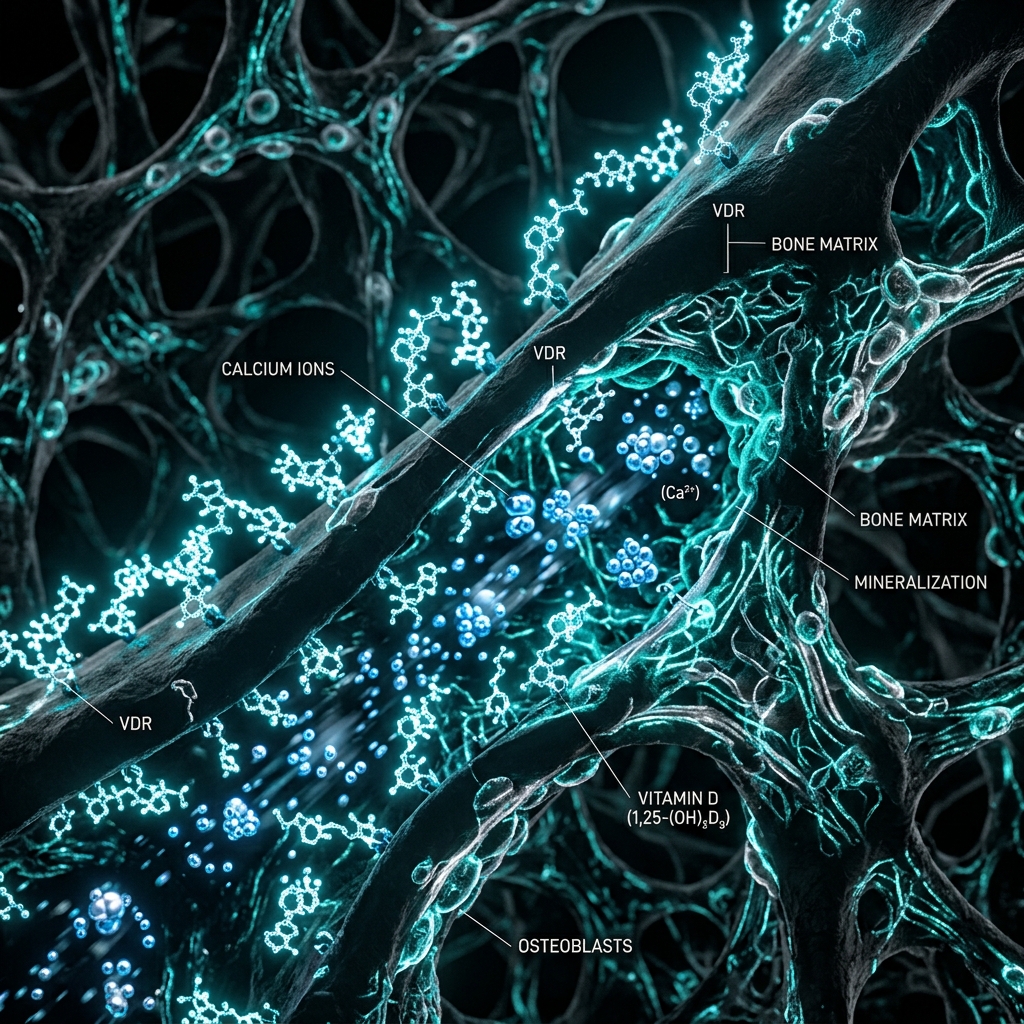
Yes, they are designed to work together. Vitamin D increases calcium absorption from your gut by 30-40%. Without adequate Vitamin D, you absorb only about 10-15% of dietary calcium. However, the modern evidence now strongly suggests you should also add Vitamin K2 to this pairing to prevent calcium depositing in your arteries instead of your bones.
The Science: How Vitamin D Supercharges Calcium
When Vitamin D levels are adequate (above 30 ng/mL), your intestinal cells upregulate a calcium-binding protein called calbindin. This protein acts as a shuttle, transporting calcium across the intestinal wall and into your bloodstream. In Vitamin D deficiency, calbindin production drops dramatically, and calcium passes through your digestive tract largely unabsorbed — regardless of how much calcium you consume.
This is why many patients with osteoporosis do not respond to calcium supplementation alone. The bottleneck is not calcium intake — it is Vitamin D-dependent absorption. A meta-analysis published in The BMJ found that calcium supplementation without Vitamin D showed no significant reduction in fracture risk. Only when combined did meaningful bone protection emerge.
The Critical Update: Add K2
Here is what most guidance still misses: Vitamin D increases how much calcium enters your blood, but it does not control where that calcium goes. High-dose calcium supplementation has been associated with increased cardiovascular events in some studies — the infamous WHI (Women's Health Initiative) data showed a potential 24% increase in heart attack risk with calcium supplements. The missing piece was K2, which activates the proteins that direct calcium into bone and away from arteries. The modern triad should be: Calcium + D3 + K2.
Dosing and Timing
Calcium: 500-600mg per dose (do not exceed 500mg at once — absorption efficiency drops sharply above this threshold). Calcium citrate is absorbed with or without food; calcium carbonate requires stomach acid, so take with meals.
Vitamin D3: 2,000-4,000 IU daily. Aim for serum levels of 40-60 ng/mL.
Vitamin K2 (MK-7): 100-200mcg daily — the critical third player.
Timing: Take with your largest meal for optimal fat-soluble vitamin absorption. Split calcium into two 500mg doses if you need more than 500mg daily (e.g., morning and evening).
Do not take with: Iron supplements, thyroid medication (levothyroxine), or certain antibiotics. Separate by at least 2-4 hours.
Who Needs This Most
Post-menopausal women: Oestrogen decline accelerates bone mineral loss. The D3+K2+Calcium triad is the cornerstone of osteoporosis prevention.
Anyone over 50: Both calcium absorption efficiency and Vitamin D synthesis from sunlight decline with age.
Individuals avoiding dairy: If your dietary calcium intake is below 800mg/day, supplementation becomes important.
People on corticosteroids: Long-term steroid use (e.g., prednisolone) accelerates bone density loss significantly.
An Educational Perspective: The calcium conversation has evolved enormously. Ten years ago, we prescribed calcium carbonate tablets by the handful. Now we understand that the dose, the form, and the cofactors all matter. It is generally preferable to get the majority of their calcium from food (sardines, leafy greens, fortified milks) and supplement only the gap — typically 500mg. Always with D3 and K2. The days of isolated high-dose calcium supplementation should be behind us.
Explore the Pillar Topic
This article belongs to our core medical pillar on The Physician's Protocol Overview. For a comprehensive, physician-guided deep dive into this topic, read the full foundational guide.
Medical Disclaimer: This article is for educational purposes only and does not constitute medical advice. If you are being treated for osteoporosis or take medications that interact with calcium, consult your healthcare provider.