
By Dr. Gavin McAuley | EMPOWERVIDA
THE SHORT ANSWER
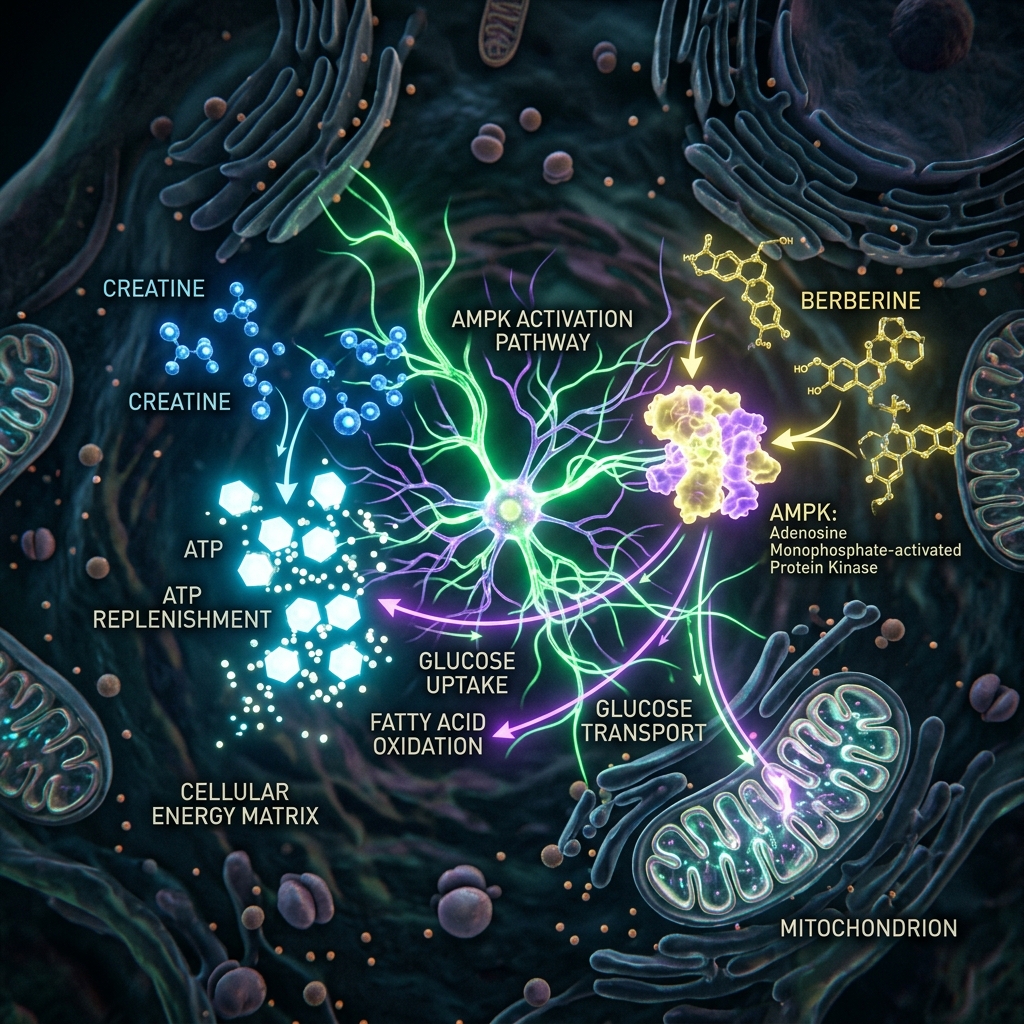
Yes — they work through entirely independent pathways and do not interact. Creatine supports the phosphocreatine energy system (instant muscular and cognitive energy), while berberine activates AMPK for metabolic health and glucose regulation. This combination bridges the gap between performance and longevity — a stack that serves both your gym sessions and your metabolic age.
Why This Combination Is Gaining Popularity
Creatine and berberine represent two of the most evidence-based supplements in their respective categories — creatine for physical and cognitive performance, berberine for metabolic health and longevity. The fact that they work through completely separate mechanisms (phosphocreatine system vs. AMPK pathway) means there is no competition, no interaction, and no diminishment of either compound's effects.
What Creatine Actually Does
Creatine is not just a gym supplement. It is a naturally occurring compound that serves as a rapid energy buffer in every cell that has high energy demands — muscles, the brain, and the heart. Your cells store energy as ATP (adenosine triphosphate), but ATP reserves last only 2-3 seconds during intense activity. Phosphocreatine donates its phosphate group to regenerate ATP instantly, extending high-intensity effort capacity by 10-15 seconds. Beyond exercise, creatine supplementation has demonstrated cognitive benefits: improved short-term memory, faster processing speed, and reduced mental fatigue — particularly under conditions of sleep deprivation or stress. A meta-analysis in Experimental Gerontology found that creatine supplementation improved cognitive function in healthy adults, with the strongest effects in older individuals.
What Berberine Does Differently
Berberine activates AMPK (AMP-activated protein kinase), often called the body's "metabolic master switch." AMPK activation mimics several effects of caloric restriction and exercise: improved insulin sensitivity, enhanced glucose uptake into cells, reduced hepatic glucose output, increased fatty acid oxidation, and inhibition of lipogenesis (fat storage). Clinical trials have demonstrated that berberine 500mg three times daily reduces HbA1c by 0.9-1.5%, lowers LDL cholesterol, and improves markers of non-alcoholic fatty liver disease (NAFLD). It also has emerging evidence for gut microbiome modulation and anti-inflammatory effects.
Dosing and Timing
Creatine monohydrate: 3-5g daily. No loading phase is necessary — consistent daily dosing saturates muscle creatine stores within 3-4 weeks. Creatine monohydrate remains the gold standard; more expensive forms (creatine HCl, buffered creatine) have not demonstrated superior efficacy in head-to-head studies. Take with any meal.
Berberine: 500mg two to three times daily, with meals. Taking with food reduces GI side effects (nausea, diarrhoea) and simultaneously allows berberine to modulate post-meal glucose spikes.
Timing separation: No specific separation needed — they do not interact. You can take them at the same meal without issue.
Safety Considerations
Creatine and kidney function: Creatine is metabolised to creatinine, which is used as a marker of kidney function in blood tests. Creatine supplementation will elevate serum creatinine — this does not indicate kidney damage. If you supplement creatine, inform your doctor before kidney function tests to avoid false-positive results. Multiple long-term studies (up to 5 years) have confirmed no adverse kidney effects in healthy individuals.
Berberine and medications: Berberine inhibits CYP3A4, CYP2D6, and P-glycoprotein. If you take prescription medications, consult your pharmacist. See our dedicated Berberine and Metformin article for specific drug interaction guidance.
Hydration: Creatine increases intracellular water retention. Ensure adequate hydration, particularly during exercise.
An Educational Perspective: I take both of these myself. Creatine monohydrate (5g/day) is arguably the most well-researched supplement in existence — over 700 peer-reviewed studies supporting its safety and efficacy for both physical and cognitive performance. Berberine (500mg 2x/day) addresses the metabolic side of ageing that most fitness-focused people neglect. Together, they represent a practical performance-plus-longevity stack with minimal risk and excellent evidence. If I could only recommend three supplements, creatine and berberine would occupy two of those three slots.
Explore the Pillar Topic
This article belongs to our core medical pillar on The Physician's Protocol Overview. For a comprehensive, physician-guided deep dive into this topic, read the full foundational guide.
Medical Disclaimer: This article is for educational purposes only. If you take diabetes medication or have kidney disease, consult your healthcare provider before starting these supplements.