
By Dr. Gavin McAuley | EMPOWERVIDA
THE SHORT ANSWER
Yes — Vitamin C dramatically improves iron absorption. Taking 200mg of Vitamin C alongside an iron supplement can increase absorption by up to 67%. This is one of the most well-established nutrient synergies in clinical medicine, and it is particularly important for anyone taking non-haem (plant-based) iron supplements.
How Vitamin C Enhances Iron Absorption
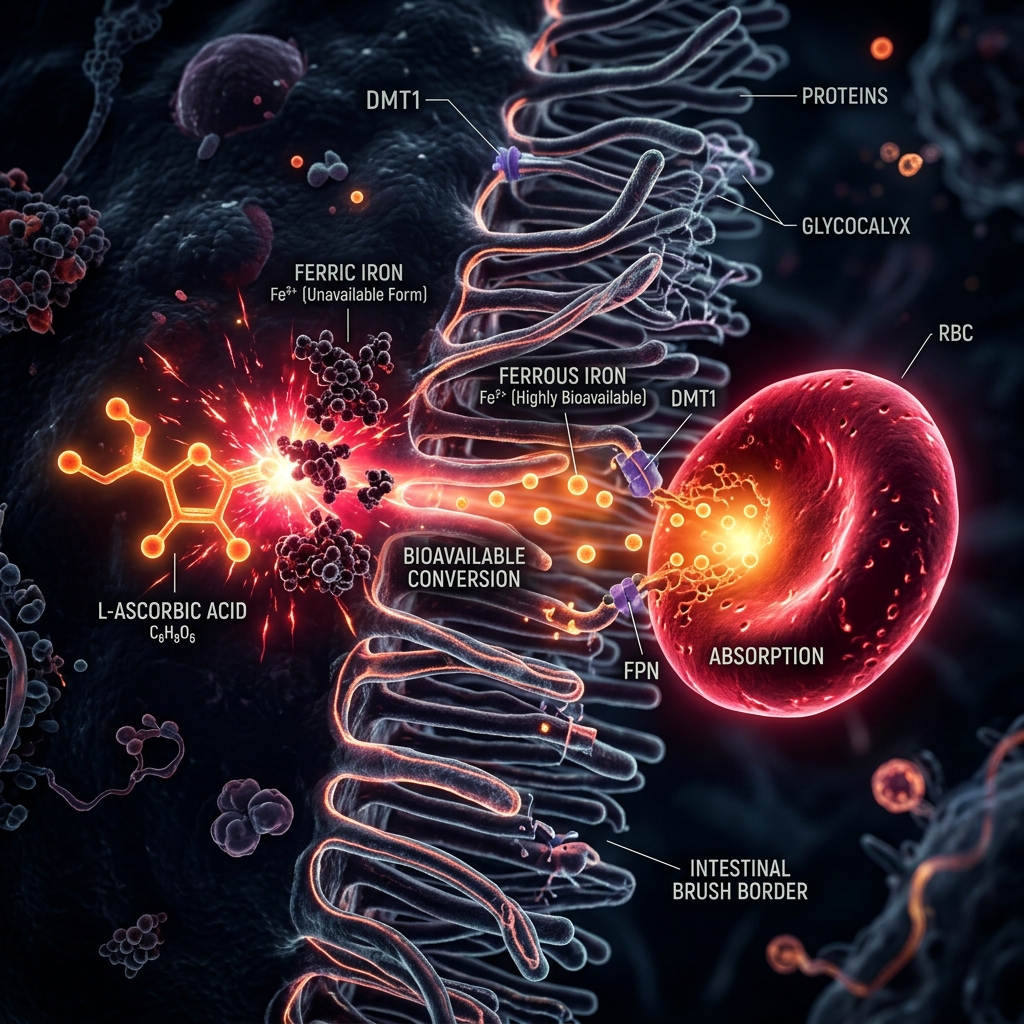
Iron exists in two forms: ferric (Fe³⁺) and ferrous (Fe²⁺). Your gut can only absorb the ferrous form efficiently. Most dietary and supplemental iron arrives as ferric iron. Vitamin C (ascorbic acid) acts as a reducing agent, converting ferric iron to ferrous iron right at the brush border of your intestinal cells. Without this conversion, much of your iron supplement passes straight through unabsorbed.
Vitamin C also chelates iron in the acidic environment of the stomach, forming a soluble iron-ascorbate complex that remains bioavailable even as the pH rises in the duodenum. This dual mechanism — reduction plus chelation — is why Vitamin C is the single most effective enhancer of non-haem iron absorption. A landmark study in the American Journal of Clinical Nutrition demonstrated a 3-6 fold increase in iron absorption when Vitamin C was co-ingested.
Who Needs This Combination Most
Vegetarians and vegans: Plant-based iron (non-haem) is inherently less bioavailable than haem iron from meat. Vitamin C bridges much of that gap.
Women of reproductive age: Menstrual blood loss depletes iron monthly. The combination ensures each dose of iron supplementation delivers maximum benefit.
Patients with iron-deficiency anaemia: If your ferritin is below 30 ng/mL or your haemoglobin is low, this pairing accelerates recovery significantly.
Anyone on proton pump inhibitors (PPIs): These medications reduce stomach acid, which impairs iron absorption. Vitamin C partially compensates by providing the acidic microenvironment iron needs.
Dosing and Timing
Iron: 18–65mg elemental iron daily, depending on severity of deficiency. Iron bisglycinate is the gentlest form on the stomach. Ferrous sulphate is the most commonly prescribed but causes more GI side effects.
Vitamin C: 200–500mg taken at the same time as iron. There is no additional absorption benefit above 500mg — the conversion reaction saturates.
Timing: Take on an empty stomach (1 hour before or 2 hours after meals) for maximum absorption. If this causes nausea, take with a small Vitamin C-rich snack (orange, kiwi, strawberries).
Avoid taking with: Tea, coffee, calcium supplements, or dairy within 2 hours. Tannins, caffeine, and calcium all inhibit iron absorption significantly.
Safety Considerations
Haemochromatosis: If you have hereditary haemochromatosis (iron overload disorder), do not supplement iron and avoid high-dose Vitamin C which further increases absorption. This affects approximately 1 in 200 people of Northern European descent.
GI side effects: Iron commonly causes constipation, dark stools, and nausea. Iron bisglycinate causes fewer GI symptoms than ferrous sulphate. Taking alternate days (every other day dosing) has been shown to improve total absorption while reducing side effects.
An Educational Perspective: I routinely prescribe iron with Vitamin C — it is standard practice. What surprises me is how many patients are prescribed iron by their GP without being told to take it with Vitamin C, or worse, are told to take it with food (which reduces absorption by up to 40%). The other tip: alternate-day dosing. A 2017 study showed that taking iron every other day actually resulted in higher total absorption than daily dosing, because hepcidin (the hormone that blocks iron absorption) spikes after each dose and takes 24 hours to normalise.
Explore the Pillar Topic
This article belongs to our core medical pillar on The Physician's Protocol Overview. For a comprehensive, physician-guided deep dive into this topic, read the full foundational guide.
Medical Disclaimer: This article is for educational purposes only and does not constitute medical advice. Iron supplementation should be guided by blood tests (serum ferritin, full blood count). Consult your healthcare provider before starting iron supplements.