
By Dr. Gavin McAuley | EMPOWERVIDA
THE SHORT ANSWER
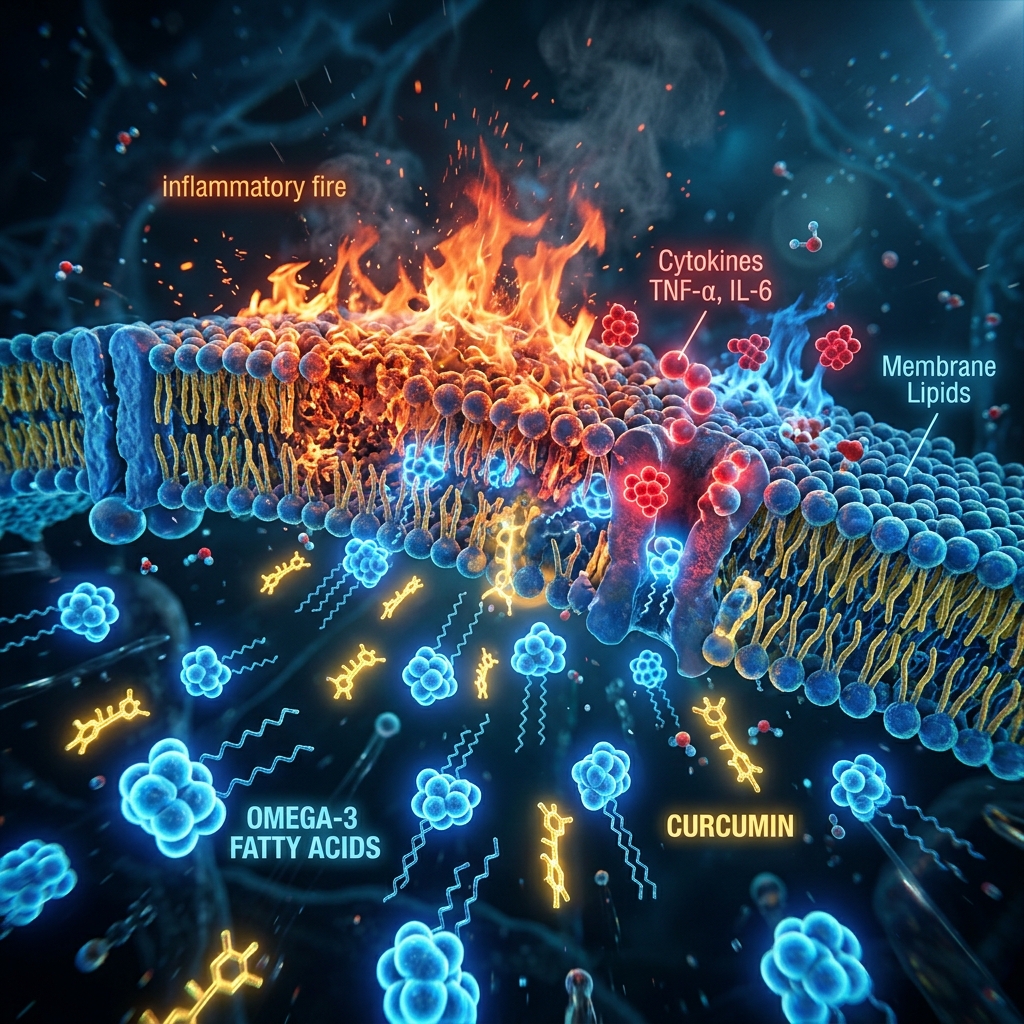
Yes — this is one of the most powerful anti-inflammatory stacks available. Omega-3 fatty acids (EPA/DHA) and curcumin attack inflammation through complementary pathways. Omega-3s suppress pro-inflammatory prostaglandins via COX and LOX enzymes, while curcumin inhibits NF-kB, the master inflammatory transcription factor. Together, they address inflammation from two directions simultaneously.
Why This Stack Is So Effective
Chronic low-grade inflammation — sometimes called "inflammageing" — is the root driver of virtually every age-related disease: cardiovascular disease, type 2 diabetes, Alzheimer's, arthritis, and many cancers. Your body produces inflammatory molecules (cytokines like IL-6, TNF-alpha) through two major control systems: the eicosanoid pathway (controlled by omega-3/omega-6 balance) and the NF-kB pathway (the nuclear transcription factor that switches inflammatory genes on and off).
Omega-3s work primarily on the eicosanoid side — EPA competes with arachidonic acid (AA) for COX and LOX enzymes, shifting production from pro-inflammatory prostaglandins to anti-inflammatory resolvins and protectins. Curcumin works on the nuclear side — directly inhibiting NF-kB activation and reducing transcription of inflammatory genes. Blocking both pathways simultaneously has been shown in clinical trials to produce greater CRP (C-reactive protein) reductions than either agent alone.
The Bioavailability Challenge
Curcumin has notoriously poor bioavailability — standard turmeric powder delivers less than 2% of its curcumin to your bloodstream. This is where omega-3s provide a bonus: the fat content improves curcumin absorption. However, you should still use an enhanced curcumin formulation. Look for Meriva (phytosome), Longvida, or curcumin with piperine (black pepper extract, which increases absorption by 2,000%).
Dosing and Timing
Omega-3: 2,000-3,000mg combined EPA+DHA daily. Prioritise EPA for anti-inflammatory effects. Use triglyceride-form fish oil (not ethyl ester) for 70% better absorption.
Curcumin: 500-1,000mg daily of an enhanced form (Meriva, Longvida, or with piperine).
Timing: Take both with a fat-containing meal. They are both fat-soluble — absorption increases 2-3x with dietary fat. Taking them together at the same meal is ideal, as the omega-3 fat further enhances curcumin uptake.
Safety Considerations
Blood thinning: Both omega-3s and curcumin have mild antiplatelet effects. If you are on warfarin, aspirin, or other anticoagulants, consult your physician. At standard supplement doses, the blood-thinning effect is clinically modest, but it can be additive with prescription anticoagulants.
Gallbladder issues: Curcumin stimulates bile production. If you have gallstones or bile duct obstruction, use curcumin cautiously.
Surgery: Discontinue both supplements 7-10 days before elective surgery due to the combined antiplatelet effect.
An Educational Perspective: I consider omega-3 + curcumin the foundational anti-inflammatory stack. For patients with elevated hs-CRP (above 1.0 mg/L), joint pain, or a family history of cardiovascular disease, this combination is where I start before considering prescription anti-inflammatories. I typically see measurable CRP reductions within 8-12 weeks. The key is consistency and using bioavailable forms — cheap turmeric capsules and low-dose fish oil will not move the needle.
Explore the Pillar Topic
This article belongs to our core medical pillar on The Physician's Protocol Overview. For a comprehensive, physician-guided deep dive into this topic, read the full foundational guide.
Medical Disclaimer: This article is for educational purposes only. If you take anticoagulant medications, consult your healthcare provider before starting this combination.