
By Dr. Gavin McAuley | EMPOWERVIDA
THE SHORT ANSWER
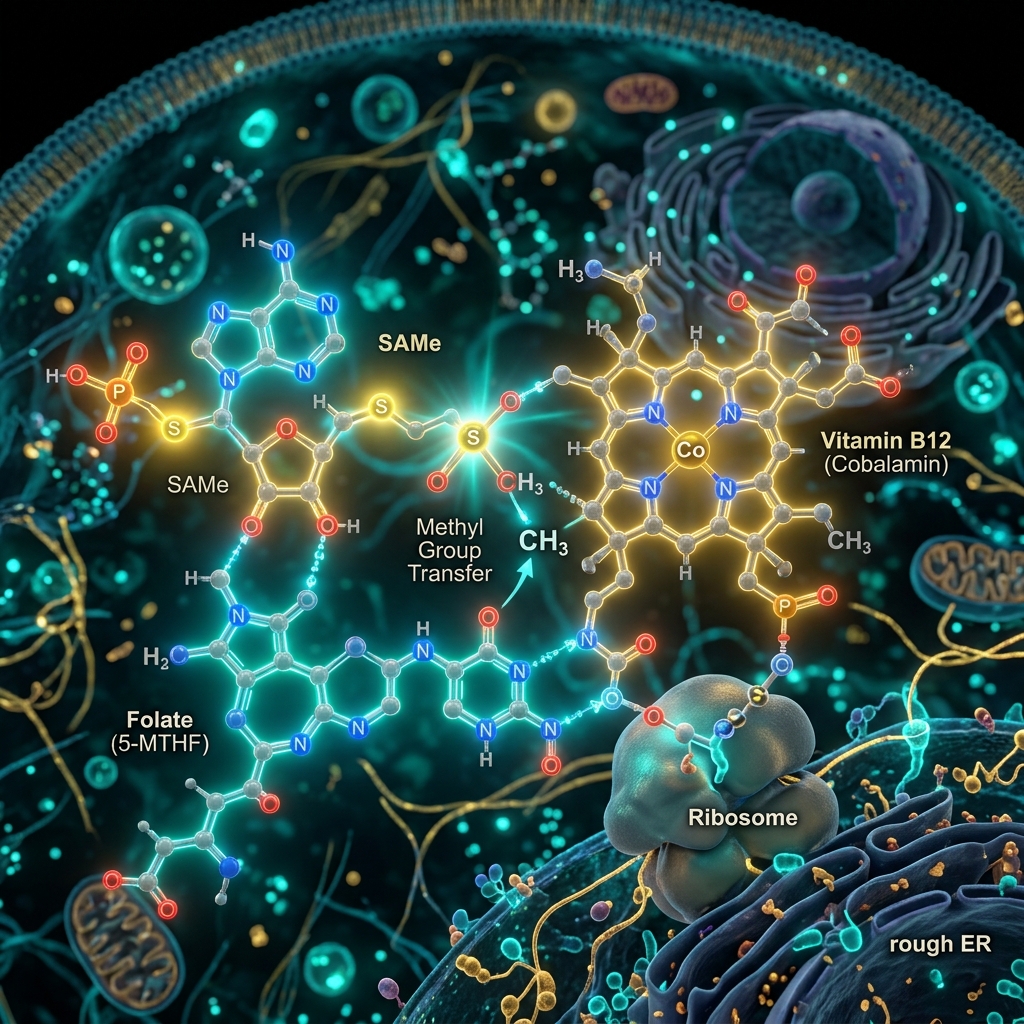
Yes, and B-vitamins are essentially required for SAMe to work properly. SAMe (S-adenosylmethionine) is your body's universal methyl donor, powering over 200 methylation reactions including neurotransmitter synthesis, DNA repair, and detoxification. B-vitamins (particularly B12, folate, and B6) are essential cofactors that recycle SAMe after it donates its methyl group. Without adequate B-vitamins, SAMe supplementation becomes inefficient and potentially counterproductive.
The Methylation Cycle Explained
Methylation is the process of transferring a methyl group (CH3) to another molecule, activating or deactivating it. SAMe is the primary methyl donor in this cycle. When SAMe donates its methyl group, it becomes SAH (S-adenosylhomocysteine), which is then converted to homocysteine. Homocysteine is toxic at elevated levels and must be recycled back to methionine (which regenerates SAMe) using two critical B-vitamin dependent pathways:
Pathway 1: Homocysteine → Methionine, catalysed by methionine synthase, which requires Vitamin B12 (as methylcobalamin) and folate (as 5-MTHF) as cofactors.
Pathway 2: Homocysteine → Cysteine → Glutathione, catalysed by cystathionine beta-synthase, which requires Vitamin B6 (as P5P) as a cofactor.
If B12 or folate are deficient, Pathway 1 stalls. Homocysteine accumulates (a cardiovascular risk factor), and SAMe recycling slows dramatically. If B6 is deficient, Pathway 2 stalls, and you lose the bonus of glutathione production (your master antioxidant). This is why B-vitamins are not optional additions to SAMe. They are mechanistic requirements.
What SAMe Does (And Why It Matters for Mood)
SAMe participates in three categories of methylation reactions relevant to mood and brain health. First, it methylates phospholipids in neuronal membranes, maintaining membrane fluidity essential for receptor function and neurotransmitter binding. Second, it methylates neurotransmitters directly, contributing to the synthesis and metabolism of serotonin, dopamine, and norepinephrine. Third, it methylates DNA and histones, regulating gene expression patterns involved in neuroplasticity.
Clinical trials have demonstrated that SAMe (800-1,600mg/day) is effective for major depressive disorder, with efficacy comparable to tricyclic antidepressants in several head-to-head studies. A Harvard study published in the American Journal of Psychiatry found that SAMe augmentation improved response rates in SSRI-resistant depression.
Dosing and Timing
SAMe: 400-800mg daily for general methylation support. 800-1,600mg for mood (depression). Start at 200-400mg and increase gradually over 2 weeks. SAMe should be taken on an empty stomach for best absorption. Use enteric-coated tablets to survive stomach acid.
B12: 1,000mcg methylcobalamin (not cyanocobalamin). The methylated form directly participates in the methylation cycle without requiring conversion.
Folate: 400-800mcg as methylfolate (5-MTHF), not folic acid. Approximately 30-40% of the population carries MTHFR polymorphisms that impair folic acid conversion to the active 5-MTHF form.
B6: 25-50mg as pyridoxal-5-phosphate (P5P), the bioactive form.
Timing: Take SAMe in the morning on an empty stomach. Take B-vitamins with breakfast.
Safety Considerations
Bipolar disorder: SAMe can trigger manic episodes in individuals with bipolar disorder. It should not be used without psychiatric supervision in bipolar patients.
SSRIs and MAOIs: SAMe increases serotonin availability. Combining with antidepressants increases serotonin syndrome risk. Discuss with your prescriber before combining.
Parkinson's medications: SAMe may interfere with levodopa. Consult your neurologist.
GI effects: Nausea and GI discomfort are common at higher doses. Enteric coating and gradual dose escalation minimise this.
Storage: SAMe is chemically unstable. Keep in blister packs, store in a cool dry place, and use enteric-coated formulations for stability.
An Educational Perspective: SAMe is one of the most underutilised tools in integrative psychiatry. For patients with depression who cannot tolerate SSRIs, or who have partial response to SSRIs, SAMe augmentation has solid clinical evidence. But I always co-prescribe a methylated B-complex (B12, folate, B6) because without these cofactors, SAMe's methyl donation stalls and homocysteine rises. I also check homocysteine levels before and after starting SAMe. If homocysteine is already elevated (above 10 umol/L), this is a red flag that B-vitamin status is already compromised and needs correcting before adding SAMe.
Explore the Pillar Topic
This article belongs to our core medical pillar on The Physician's Protocol Overview. For a comprehensive, physician-guided deep dive into this topic, read the full foundational guide.
Medical Disclaimer: This article is for educational purposes only. SAMe can interact with psychiatric medications and is contraindicated in bipolar disorder. Do not use as a substitute for prescribed antidepressants without medical guidance.