By Dr. Gavin McAuley | EMPOWERVIDA
TL;DR
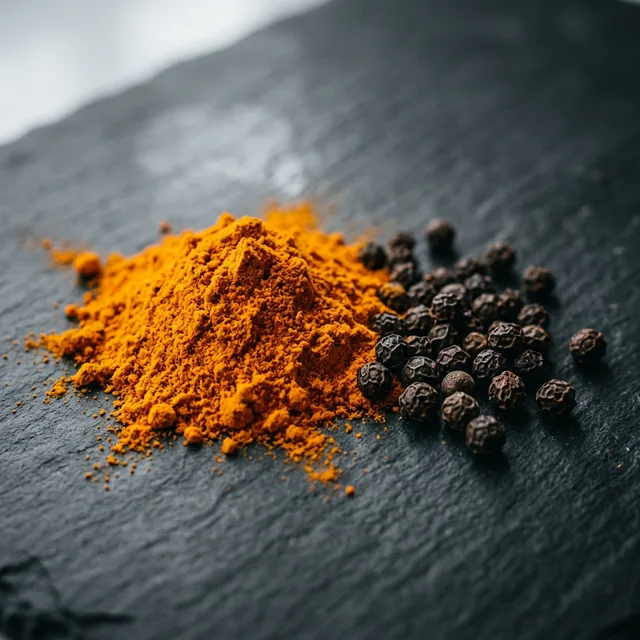
Curcumin, the active compound in Turmeric, has notoriously poor bioavailability. Without a "delivery vehicle," it is rapidly metabolised and excreted by the liver. To unlock its systemic anti-inflammatory benefits—and its potential to clear neurotoxic plaques in the brain—you must pair it with Piperine (Black Pepper) and Healthy Fats. This combination can increase absorption by up to 2,000%.
The Clinical Evidence: Moving Beyond the "Superfood" Label
Turmeric is often grouped with various trending "superfoods," leading to skepticism within traditional medical paradigms that prioritize pharmaceutical-grade interventions. Without understanding the pharmacokinetics, standard root powder administration frequently fails to produce measurable clinical outcomes.
However, emerging clinical data, particularly in the management of Inflammatory Bowel Disease (IBD) and chronic inflammatory conditions, demonstrate that targeted, high-dose Turmeric can significantly reduce flare frequency and severity.
When confronted with repeatable clinical improvements, it becomes clear that the primary hurdle in utilizing Turmeric is not a lack of efficacy, but rather a profound failure of delivery and absorption.
The Biological Hurdles: The "First-Pass" Problem
Most people take Turmeric and expect it to work like an Ibuprofen. However, Curcumin (the active polyphenol) faces a "triple threat" in the human body:
- Low Solubility: It doesn't dissolve well in water (our blood is water-based).
- Rapid Metabolism: The liver is designed to identify Curcumin as a foreign substance and tag it for immediate excretion (a process called glucuronidation).
- Low Absorption: Very little actually crosses the gut lining into the bloodstream.
This explains why standard supplementation frequently fails to resolve systemic symptoms like "brain fog." To achieve a measurable reduction in neuro-inflammation and improved cognitive clarity, administration must respect the underlying biochemistry by pairing Curcumin with specific metabolic co-factors.
The Synergy: How Black Pepper "Hacks" the Liver
The secret to unlocking Turmeric lies in a compound called Piperine, found in black pepper.
Piperine is a potent inhibitor of the metabolic pathway that the liver uses to "trash" Curcumin. Specifically, it inhibits the enzyme UDP-glucuronosyltransferase. When you take Piperine with Curcumin, it effectively tells the liver to "stand down," allowing the Curcumin to circulate in the bloodstream for a significantly longer duration.
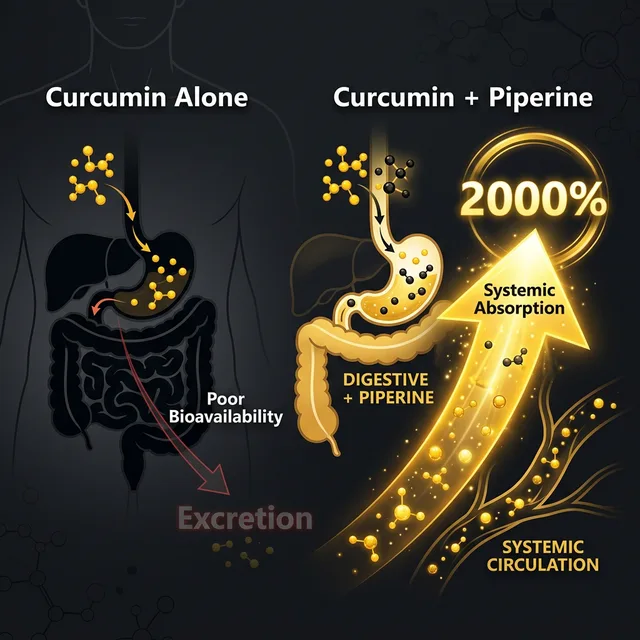
The numbers are staggering: Research shows that just 20mg of Piperine added to 2,000mg of Curcumin increases its bioavailability by 2,000%.
Beyond the Gut: The Alzheimer's Connection
In longevity medicine, Turmeric's neuroprotective mechanisms are of paramount importance. As populations face escalating rates of cognitive decline, research detailing Curcumin's capacity to cross the blood-brain barrier offers profound therapeutic potential.
Amyloid Plaque Breakdown
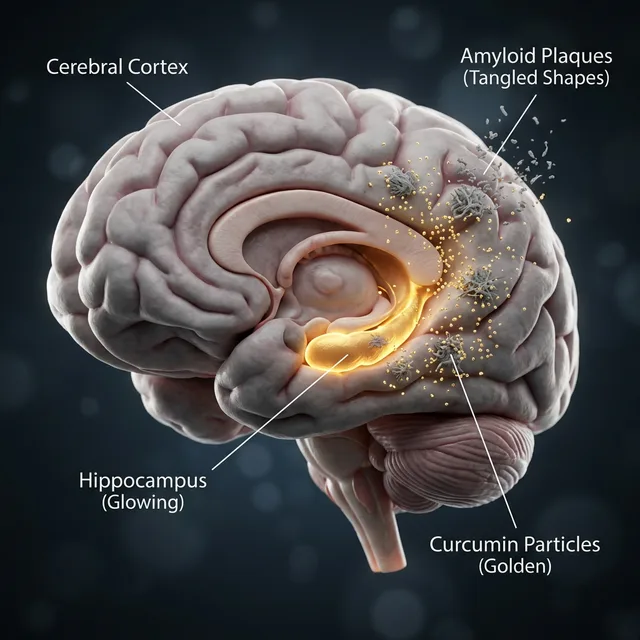
In significant animal models, Curcumin has demonstrated a unique ability to bind to and dissolve Amyloid-beta (Aβ) plaques—the "toxic protein tangles" synonymous with Alzheimer's Disease.
One seminal study (Zhang et al.) showed that Curcumin significantly reduced the amyloid level in the brain of "Alzheimer's-model" mice. It doesn't just block the formation of new plaques; it stimulates macrophages (the "clean-up crew" of the immune system) to clear existing plaque deposits. This is a potential "holy grail" for preventative neuro-medicine.
Neuro-Inflammation and BDNF
Curcumin also stimulates the expression of Brain-Derived Neurotrophic Factor (BDNF), a protein critical for neurogenesis. Elevated BDNF levels are associated with enhanced memory consolidation and the formation of new neural networks, directly correlating with improved clinical markers of cognitive clarity.
The Role of Fats: The Third Pillar
Because Curcumin is highly lipophilic, it necessitates a lipid-rich environment for intestinal absorption. A common clinical error is administering Turmeric supplements on an empty stomach with water, which severely restricts bioavailability.
To achieve systemic neuro-cognitive benefits, Curcumin must be co-administered with dietary fats. This facilitates the formation of digestive "micelles" that transport the compound efficiently across the intestinal epithelium.
Clinical Dosing Protocol
To transition from theoretical benefit to measurable clinical outcomes, strict adherence to the following administration hierarchy is required:
- The Formula: Look for a supplement that contains 95% Curcuminoids.
- The Piperine Factor: Ensure it contains Bioperine or take it with fresh cracked black pepper.
- The Dosage: 500–1,000mg of Curcuminoids daily.
- The Timing: Take it with your largest meal of the day (containing fats) or pair it with your Omega-3 capsules.

Clinical Contraindications
While Curcumin maintains a robust safety profile, the following clinical contraindications must be observed:
- Blood Thinners: Curcumin has mild anti-platelet properties. Consult your doctor if you are on anticoagulants.
- Oxalates: Use high-purity extracts rather than raw powder if you are prone to kidney stones.
- Iron: Take Turmeric away from iron supplements if you are anaemic, as it can hinder absorption.
Clinical Conclusion
The fundamental principle of clinical supplementation is that correct compounds administered in incorrect biological environments are inert. Whether the therapeutic goal is modulating gastrointestinal inflammation or facilitating the clearance of neurotoxic amyloid proteins, precise metabolic architecture is paramount. The strategic addition of Piperine and dietary lipids fundamentally alters the pharmacokinetics of Curcumin, rendering it a potent systemic intervention.
Clinical Addendum: The Architecture of Sleep
All the interventions we have discussed are completely nullified if you fail to optimize the foundation of human performance: sleep architecture. It is common to observe many individuals spending thousands on peptides and advanced therapies, yet they are chronically sleep-deprived. You cannot out-supplement poor sleep.
Sleep is not a passive state of unconsciousness. It is a highly active, metabolically demanding period of systemic repair. During the initial stages of deep, slow-wave (Delta) sleep, your pituitary gland releases massive surges of Human Growth Hormone (HGH), which is responsible for repairing muscle tissue, strengthening bones, and mobilizing stored fat. Simultaneously, your brain physically shrinks to allow cerebrospinal fluid to power-wash metabolic waste away through the glymphatic system.
During the later stages of REM sleep, your brain consolidates memories, processes emotional trauma, and rebuilds the synaptic networks required for learning and neuroplasticity. When you cut your sleep short by even 90 minutes, you disproportionately rob your brain of this critical REM phase.
Most adults are not actually sleeping; they are simply sedated. Alcohol, prescription sleep aids, and chronic stress fragment your sleep architecture, preventing you from ever reaching these restorative stages. To support healthy biological aging, you must treat sleep as a clinical intervention. This means respecting your circadian biology: viewing morning sunlight to set your cortisol rhythm, avoiding blue light 90 minutes before bed, dropping your core body temperature, and utilizing targeted compounds like Magnesium Bisglycinate to facilitate the transition into deep sleep.
Clinical Addendum
This content is for educational and informational purposes only. It is not intended as medical advice and should not replace consultation with a qualified healthcare professional. Always consult your physician before starting any new supplement, diet, or exercise programme.