

By Dr. Gavin McAuley | EMPOWERVIDA
Educational Perspective
There is a growing trend of individuals investing heavily in NAD+ precursors like NMN and Nicotinamide Riboside (NR), expecting an immediate resolution for cognitive fatigue. When results are lacking, the assumption is often that the supplement is ineffective. However, as described by López-Otín in the 2023 Hallmarks of Aging update, NAD+ is just one critical piece of a much larger metabolic puzzle. NAD+ cannot unilaterally optimize cellular energy if underlying systems are compromised by factors such as disrupted sleep, thyroid imbalances, insulin resistance, or low ferritin. Here is an exploration of 4 potential non-NAD+ bottlenecks related to cognitive fatigue.
Beyond "Normal" Lab Results
A common scenario involves individuals presenting with severe afternoon fatigue and cognitive decline (commonly described as "brain fog"), despite standard blood panels for iron, thyroid, and glucose returning as "normal." These symptoms are sometimes dismissed as mere stress or sleep deprivation, which may miss underlying metabolic and mitochondrial factors.
In the context of longevity science, "Normal" does not necessarily mean "Optimal." Neural energy pathways can be compromised by factors like neural insulin resistance or disrupted sleep architecture. The solution often isn't a single supplement like NAD+; it involves supporting the deep, underlying bio-energetic systems. Exploring these potential bottlenecks can provide a broader perspective on cognitive energy.
1. The Hypoxic Brain: Ferritin and Oxygen Delivery
Your brain is physically small, but it consumes roughly 20% of your entire body's oxygen supply at rest. Oxygen is transported through your blood bound to haemoglobin, which requires iron. However, iron's role in the brain goes far beyond oxygen transport; it is biologically critical for the actual manufacturing of energy.
The standard blood panel run by most GPs checks your "haemoglobin." If you are not overtly anaemic, they tell you your iron is "normal." They rarely check Ferritin, which is your body's deep iron storage.
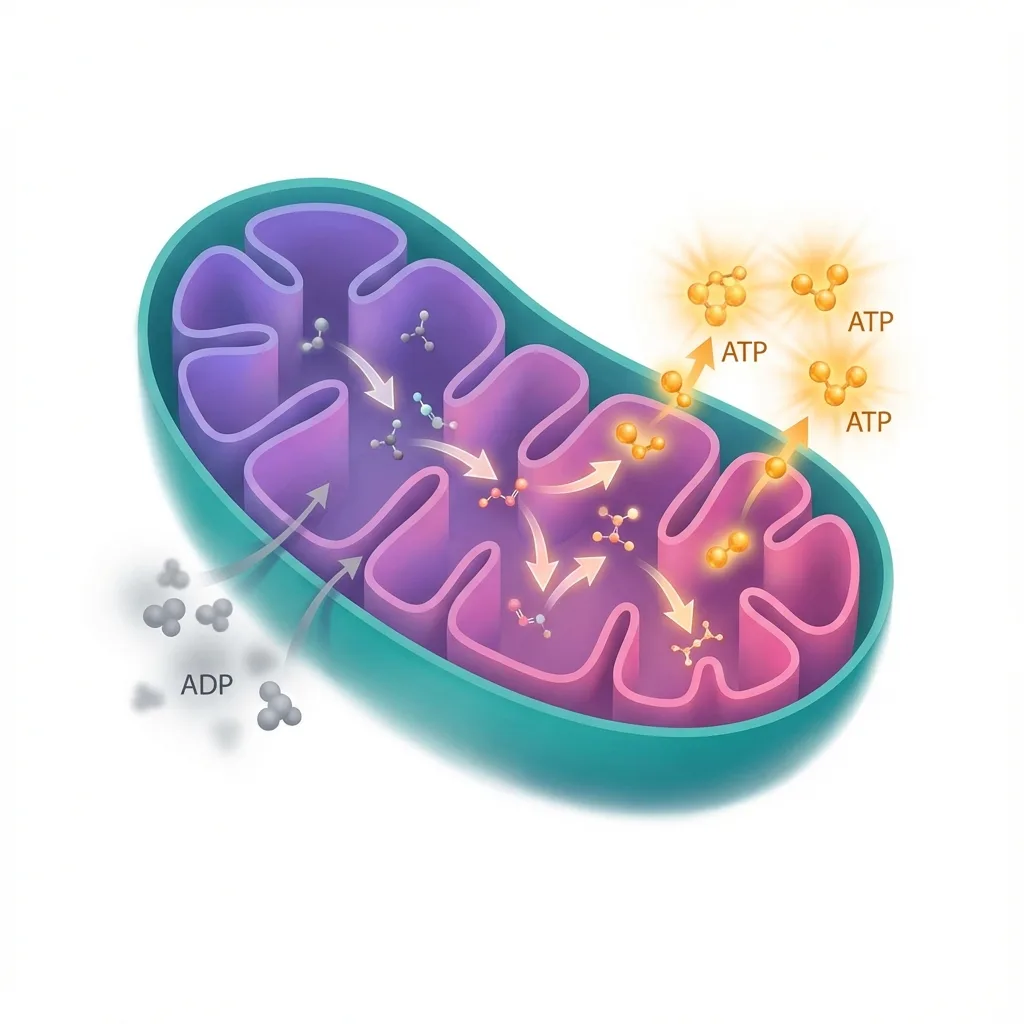
If Ferritin drops below certain optimal thresholds (often considered below 50 ng/mL in functional contexts), neuronal mitochondria may struggle to produce ATP efficiently. Iron serves as a crucial cofactor for the Electron Transport Chain (specifically Cytochrome c oxidase, or Complex IV). This is the final step where oxygen is utilized to generate energy. If deep iron stores are insufficient, this process can be impaired. Introducing high-dose NAD+ in this scenario may speed up the first phase of metabolism, potentially encountering a bottleneck at Complex IV and contributing to oxidative stress. It is analogous to fuelling an engine without sufficient oxygen. Many longevity frameworks suggest targeting ferritin levels of 80+ for optimal cellular energy. Explore more about interpreting normal labs and fatigue here.
2. Neural Insulin Resistance: Starving in a Sea of Fuel
If you experience massive energy crashes at 2 PM or 3 PM, the culprit is often glycemic, not mitochondrial. This is typically accompanied by a feeling of intense lethargy directly after eating a heavy meal (a "post-meal coma").
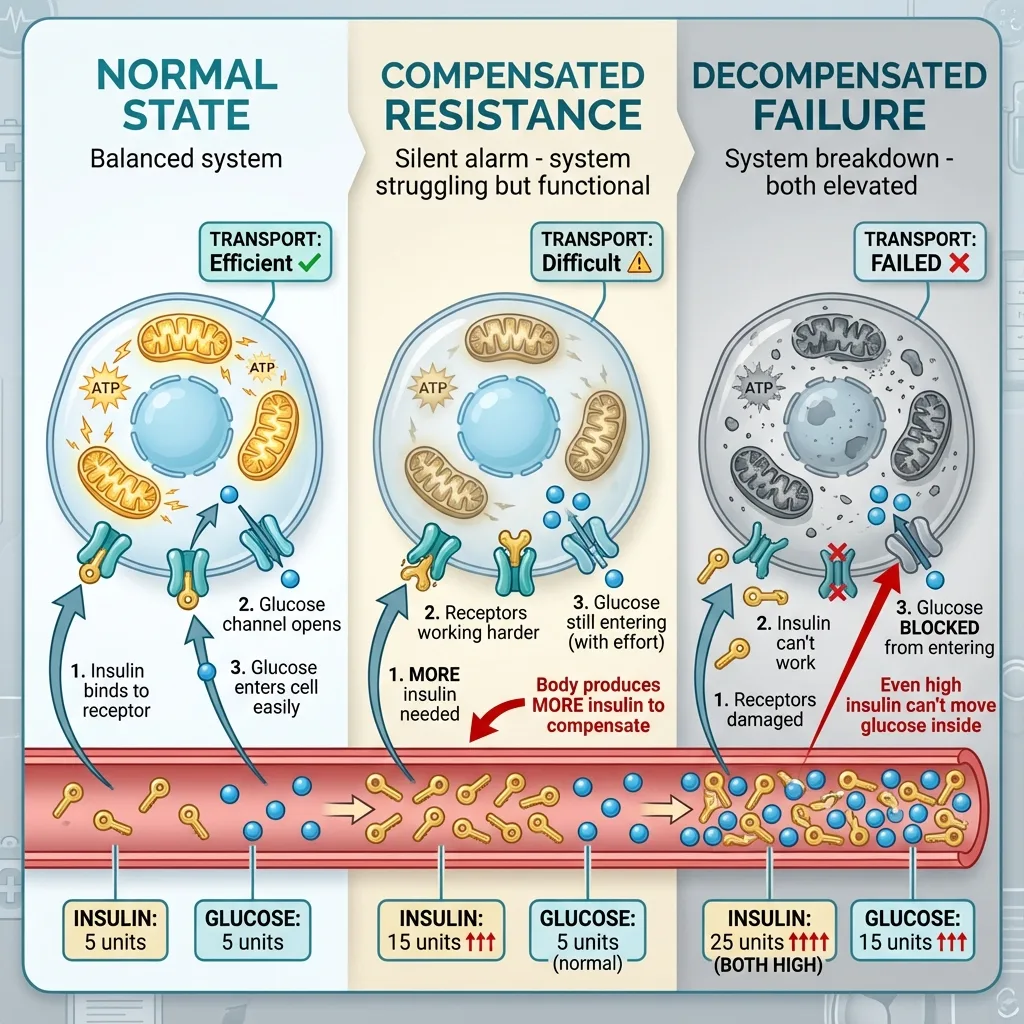
The brain relies heavily on glucose for energy. However, prolonged exposure to diets high in refined carbohydrates can lead to sustained high levels of insulin. Over time, cells may downregulate their insulin receptors in response to this constant load, becoming less responsive to the signal. If neurons become insulin resistant, their ability to take in glucose is impaired. Even if glucose is abundant in the bloodstream, the cells may lack the necessary fuel for optimal function.
Taking an NAD+ precursor does not directly address impaired glucose uptake. Supporting insulin sensitivity is a foundational step. Approaches often include activating the AMPK pathway (a cellular energy sensor) through consistent Zone 2 cardiovascular exercise and structured fasting windows. Activating AMPK can encourage glucose transporters (GLUT4) to move to the cell surface independently of insulin. Discover educational frameworks for supporting metabolic flexibility here.
3. Fractured Sleep Architecture: The Glymphatic Blockade
Patients often tell me, "I don't understand why I am tired; I sleep 8 hours every night." To a clinical longevity physician, the duration of your sleep is completely irrelevant if your sleep architecture is fractured.
Conditions like Undiagnosed Obstructive Sleep Apnea (OSA) or Upper Airway Resistance Syndrome (UARS) cause micro-arousals hundreds of times a night. You don't consciously wake up, but your brain is violently yanked out of Deep, restorative Slow-Wave sleep. During healthy deep sleep, your brain physically shrinks by up to 20%, allowing cerebrospinal fluid to rush in and activate the Glymphatic System. This acts like a dishwasher, flushing out all the metabolic "sewage" (like amyloid-beta and tau proteins) you accumulated during the day.
If your sleep architecture is fractured by a narrow airway or a screaming nervous system, that physical shrinking never occurs, and that toxic sewage stays completely trapped inside your cranium. You wake up feeling like you are thinking through mud because you are literally intoxicated by your own cellular waste. You don't need NAD+; you need to lower your cortisol floor and fix your sleep staging. Explore the physician's guide to fixing a broken sleep and cortisol curve.
4. Subclinical Hypothyroidism: The Broken Thermostat
If your mitochondria are the microscopic furnaces of your cells, your Thyroid gland is the central thermostat that dictates exactly how hot those furnaces are permitted to burn. If the thermostat is broken, the whole house goes cold.
Most GPs run a single, outdated test for thyroid function: TSH (Thyroid Stimulating Hormone). If it returns a value between roughly 0.4 and 4.0 mIU/L, you are summarily declared "normal" and sent home. But in functional and longevity medicine, we frequently see patients who have a perfectly normal TSH, but whose bodies fail to convert the inactive T4 hormone into the active T3 hormone at the cellular level.
Why does this matter? Because active T3 must physically enter the nucleus of your cell to switch on the genes responsible for Mitochondrial Biogenesis (building new mitochondria). If your active T3 is low—often caused by hidden Selenium deficiency or chronic systemic inflammation—your cells stop building new furnaces. Your basal metabolic rate crashes. Your hair thins, your hands are cold, and your brain fog is unrelenting because the total volume of your mitochondrial pool has shrunk. No amount of supplemental NAD+ will fix a cell lacking the structural machinery to process it.
5. The Importance of Timing with Mitochondrial Support
Optimizing the NAD+ pool remains a cornerstone of longevity protocols, provided the underlying biological systems are functioning well. However, the timing of such interventions is a crucial factor that is often overlooked.
Because NAD+ precursors support the actual production of cellular energy (ATP), taking them late in the day can interfere with the body's natural transition into sleep. Unlike caffeine, which merely masks fatigue by blocking adenosine receptors, NAD+ support facilitates genuine energy generation.
Taking mitochondrial support supplements in the evening may result in a state of wakefulness, as the neurons have abundant energy and are less inclined to power down into sleep staging. This highlights the physiological impact of these molecules when the underlying pathways are active.
A common educational framework suggests addressing the foundational bottlenecks first—such as sleep, oxygen delivery, and metabolic flexibility. Once these are supported, mitochondrial supplements (like NAD+ precursors and Creatine) are typically taken early in the day to align with the body's natural energy requirements and avoid disrupting sleep architecture.
The Systems Approach
Addressing cognitive fatigue often benefits from a systems-biology perspective, rather than relying on a single molecule.
- Comprehensive Assessment: Working with a healthcare provider to assess markers like Fasting Insulin, Ferritin, and a full Thyroid Panel can provide a clearer picture of metabolic health. Sleep tracking devices can also offer insights into sleep architecture.
- Address Foundational Factors: Educational frameworks often prioritize addressing identified bottlenecks—such as supporting iron levels if ferritin is low, or exploring structured eating windows to support metabolic flexibility and insulin sensitivity.
- Targeted Mitochondrial Support: Once foundational systems (like sleep and nutrient delivery) are supported, some individuals consider a mitochondrial stack early in the day. A common approach pairs an NAD+ precursor with Creatine Monohydrate to support multiple cellular energy pathways.
Medical Disclaimer
This information is for educational purposes and does not constitute medical advice. Consult your physician before starting any new supplement regimen, particularly if you have existing medical conditions or take prescription medications.