
By Dr. Gavin McAuley | EMPOWERVIDA
TL;DR
A "normal" fasting glucose test is misleading. Most metabolic damage—including arterial damage, brain fog, and chronic fatigue—happens during massive post-meal blood sugar spikes. These spikes act like microscopic shards of glass, scraping the lining of your blood vessels (the endothelium). Discover why continuous monitoring and targeted interventions like Berberine and Apple Cider Vinegar are essential to halt the silent damage.
The Physician’s Note: The 8:00 AM Illusion
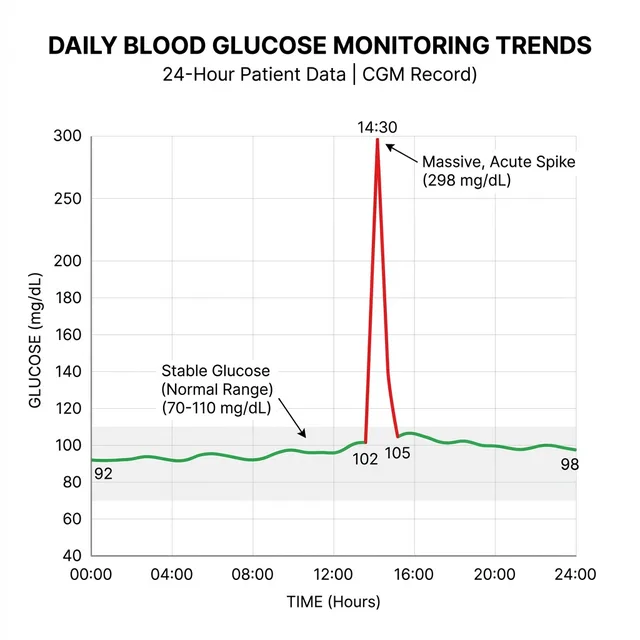
Walk into any standard general practice for an annual check-up, and your doctor will reliably order a Fasting Blood Glucose test. You fasted for 12 hours, they draw the blood, and the result comes back at 90 mg/dL (or ~5.0 mmol/L). The doctor smiles, tells you that your blood sugar is "perfectly normal," and sends you on your way.
As a physician who spent over a decade in frontline medicine before transitioning into Longevity Medicine, I see this interaction as one of the greatest failures of modern healthcare.
It is common to observe individuals presenting with unexplained weight gain, severe afternoon fatigue, and profound brain fog, all while their fasting glucose sits perfectly within the "normal" reference range. When these patients are transitioned to a protocol involving continuous glucose monitoring, intermittent fasting, and targeted carbohydrate reduction, the improvement is often dramatic. The weight shifts, energy stabilizes, and cognitive clarity returns. Yet, standard fasting lab work would have missed their metabolic distress entirely. That is the illusion of the 8:00 AM blood draw.
That fasting number is an illusion. It tells me what your blood sugar is when you are doing absolutely nothing, in a perfectly starved state. It tells me nothing about what happens to your body at 2:00 PM after you eat a supposedly "healthy" sandwich and a fruit smoothie.
What Happens When You Spike? (The Micro-Shards of Glass)
A Continuous Glucose Monitor (CGM) changes everything. If we put a CGM on that same "perfectly normal" patient, we often see their blood sugar skyrocket to 180 or even 200 mg/dL after a carbohydrate-heavy meal.
Why does this matter if it eventually comes back down? Because of Endothelial Damage.
Think of your blood vessels as smooth, Teflon-coated pipes. The delicate inner lining is called the endothelium. When blood glucose spikes rapidly, it causes acute oxidative stress and glycation. In clinical terms, circulating high glucose acts like microscopic shards of glass, scraping and tearing at that smooth Teflon lining.
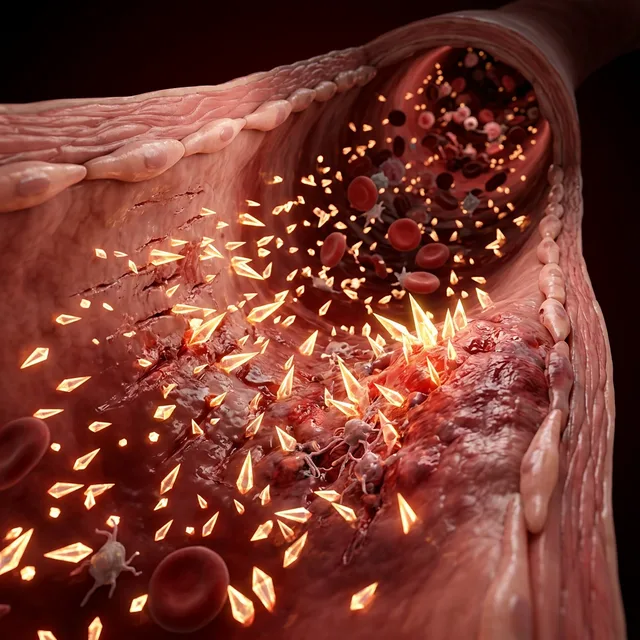
The body tries to heal these micro-tears using cholesterol as a biological "plaster." Over decades, this constant cycle of spiking, tearing, and plastering leads to arterial plaque. By the time your fasting glucose finally creeps out of the "normal" range ten years later, the cardiovascular damage is already deeply established.
The Insulin Cost: Hyperinsulinemia
There is a second reason these post-meal spikes are dangerous: The Insulin Crash.
To force a massive spike of glucose out of your bloodstream, your pancreas has to hyper-secrete Insulin. Insulin is a fat-storage and growth hormone. High insulin puts a hard lock on your fat cells; you cannot lose weight while insulin is elevated.
Worse, that massive wave of insulin often overcorrects the problem. It shoves so much glucose into your cells that your blood sugar plummets below baseline. This reactive hypoglycemia happens about two hours after eating. You know this feeling intimately: it is the 3:00 PM brain fog, the sudden exhaustion, the desperate craving for coffee or a sugary snack.
The Physician’s Protocol: Flattening the Curve
We don't just want a normal fasting number; we want a perfectly "flat" metabolic curve throughout the day. Here is how we engineer it:
1. The 10-Minute Walk
Muscle is a glucose sink. But it only absorbs glucose independently of insulin when it is contracting. Walking for just 10 minutes immediately after a meal opens up the GLUT4 receptors in your leg muscles, soaking up the glucose spike before it can hit your bloodstream. Never sit at your desk immediately after lunch.
2. Apple Cider Vinegar (Acetic Acid)
Taking one tablespoon of ACV in a tall glass of water before a meal slows gastric emptying and inhibits alpha-amylase (the enzyme that breaks down carbs). Clinical studies show this simple habit can blunt a glucose spike by up to 30%.
3. Berberine: The "Metabolic Architect"
If you are eating a carbohydrate-heavy meal, Berberine is an incredibly powerful adjunctive tool. It activates AMPK (the cellular energy switch), forcing your cells to pull glucose out of the blood without requiring massive amounts of insulin. In numerous trials, Berberine has been shown to be as effective as pharmaceutical metformin in controlling post-prandial (post-meal) spikes. Educational frameworks often suggest 500mg taken 15-20 minutes before your largest meal of the day.
Read next: Why Your Normal Blood Work is Hiding a Metabolic Crisis →
The Takeaway: Demand Real Data
Do not be lulled into a false sense of security by a standard fasting lab test. If you suffer from afternoon fatigue, brain fog, or stubborn weight retention, you are likely experiencing violent blood sugar excursions throughout the day.
Protect your endothelium. Flatten the spike. By optimising your post-meal responses with movement and strategic supplementation, you safeguard your long-term cardiovascular and cognitive wealth.
An Educational Framework
- Test: Ask your GP for a fasting insulin test alongside standard glucose and HbA1c. Calculate your HOMA-IR score (fasting insulin × fasting glucose ÷ 22.5). A HOMA-IR above 1.5 signals early insulin resistance, even with "normal" glucose.
- Eat: Front-load protein and fat at every meal. Eat vegetables and protein first, carbohydrates last. This simple sequencing can significantly blunt glucose excursions. Eliminate liquid sugar entirely.
- Move: Walk for 10 minutes after every meal. Post-meal walking reduces glucose spikes. Add resistance training 3x weekly to build your glucose "sink" (muscle tissue).
Clinical Addendum
This information is for educational purposes and does not constitute medical advice. Consult your physician before changing your diet or implementing supplements like Berberine, particularly if you are currently prescribed anti-diabetic medications or insulin, as this may increase the risk of hypoglycemia.