
By Dr. Gavin McAuley | EMPOWERVIDA
📋 TL;DR
Creatine and nicotinamide mononucleotide (NMN) can be taken on the same day, and no direct interaction between them has been established. However, no human trial has tested the combination or shown that it is synergistic. Creatine has substantial evidence for strength and repeated high-intensity performance; NMN can increase NAD-related metabolites, but evidence for meaningful long-term health benefits remains preliminary.
THE SHORT ANSWER
Probably, for many otherwise healthy adults—but the evidence supports a cautious answer. Creatine and NMN act in different biochemical systems, and there is no recognised reason that they must be separated. That is not the same as proving the combination is more effective than either supplement alone. The choice should depend on the reason for use, health history, medicines and product quality.
How Creatine and NMN Differ
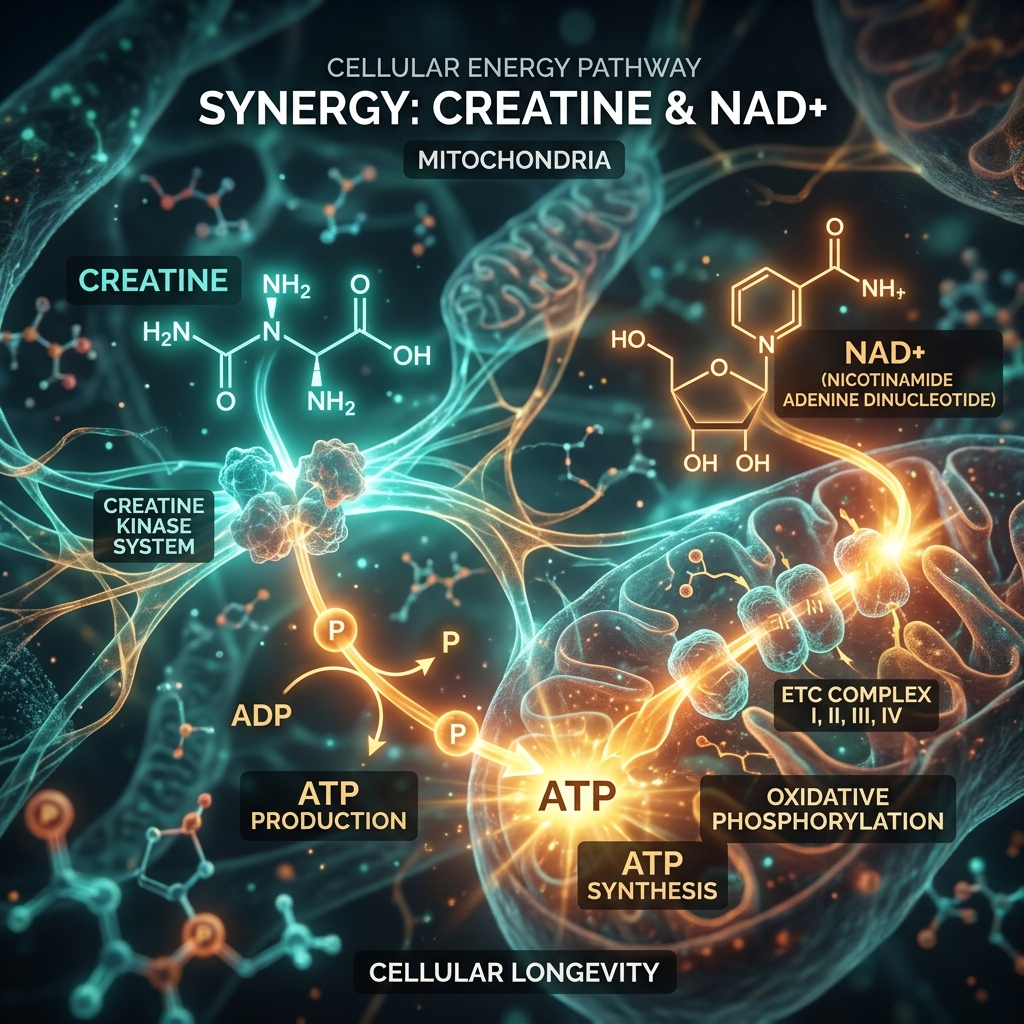
Creatine helps buffer short-term energy demand. In muscle and brain, the creatine kinase system transfers a phosphate group between phosphocreatine and ADP, helping regenerate ATP when demand changes quickly.
NMN’s role: NMN is a precursor used by the body to make nicotinamide adenine dinucleotide (NAD+). NAD+ accepts electrons during metabolic reactions and is converted to NADH; NADH can then donate electrons to the mitochondrial electron-transport chain. Raising a blood NAD-related measure is a biochemical outcome, not proof that a person will feel more energetic, think more clearly or live longer.
These systems are biologically connected to energy metabolism, but mechanistic plausibility does not establish a clinically useful interaction. I could not identify a randomised human trial comparing creatine plus NMN with either supplement alone.
What the Mechanism Does—and Does Not—Show
It is reasonable to describe creatine and NMN as affecting different parts of energy metabolism. It is not reasonable to promise a “dual-pathway energy boost”, cognitive improvement or longevity benefit from combining them without direct clinical evidence.
Dosing and Timing: What the Evidence Supports
Creatine monohydrate: A maintenance intake of 3–5 g daily is commonly studied in adults. A loading phase can increase muscle stores more quickly but is not essential. For most people, consistency matters more than whether creatine is taken in the morning or after exercise.
NMN: Short human trials have used different doses and populations, so they do not establish one universal regimen. In Australia, NMN-containing listed medicines are subject to specific TGA conditions, including a maximum recommended daily dose of 500 mg, use for no longer than 12 weeks, adults only, and exclusion during pregnancy and lactation. Follow the label of an ARTG-listed product and seek individual advice rather than copying a dose from a study.
There is no convincing human evidence that NMN must be taken in the morning, that evening use inevitably disrupts sleep, or that taking it with creatine improves absorption. A practical schedule should prioritise adherence and any directions on the product label. If a supplement appears to affect sleep or causes adverse effects, stop and seek advice.
What Human Studies Actually Show
Creatine is supported by a large research base for improving strength, lean mass gains during resistance training and repeated high-intensity exercise performance. Evidence for cognitive effects is less consistent and may depend on factors such as diet, sleep deprivation, age and baseline creatine status.
NMN trials are much smaller and shorter. Studies have shown increases in blood NAD-related metabolites, and selected trials have reported signals in outcomes such as muscle insulin sensitivity or physical function in specific populations. These findings do not prove broad benefits for energy, cognition, recovery, biological age or longevity. A trial of the related precursor nicotinamide riboside in older adults with mild cognitive impairment increased blood NAD+ but did not improve cognition over the study period.
Who Might Consider One or Both Supplements?
Creatine may be reasonable for an adult with a defined strength, training or dietary goal. NMN is a more experimental choice: the biological rationale is interesting, but long-term clinical benefit and safety remain uncertain. Age alone, afternoon fatigue or “brain fog” does not establish a deficiency in creatine, NAD+ or NMN.
- Training goals: Creatine has the clearest role when paired with resistance or repeated high-intensity exercise.
- Low dietary creatine intake: Vegetarians and vegans generally consume less creatine, although response still varies.
- NMN: Consider only after discussing the uncertain benefit, short trial durations, product quality and personal risk factors.
Why “NAD+ Decline” Needs Careful Interpretation
NAD biology changes with ageing, inflammation and metabolic disease, but there is no clinically validated age-by-age blood curve that can diagnose an individual’s need for NMN. Measurements differ by tissue, sample type and assay, and blood values may not reflect NAD+ availability in muscle, brain or other organs.
- A plausible mechanism is not a diagnosis.
- An increase in a biomarker is not automatically a patient-important benefit.
- Short-term tolerability does not establish long-term safety.
- Symptoms such as fatigue and brain fog have many causes that deserve ordinary clinical assessment.
CD38 and other enzymes are relevant to NAD+ metabolism, but statements that a supplement is being “consumed before it can do its job” go beyond what can be concluded for an individual. The useful clinical question is not whether a pathway sounds compelling; it is whether a well-designed human trial shows a meaningful benefit that outweighs cost and risk.
Creatine is different because it has a much larger evidence base and measurable performance outcomes. Even so, not everyone needs it, and cognitive benefits should not be promised universally. Diet, training status, sleep and baseline stores can influence response.
Evidence Gap
There is currently no direct human evidence that adding NMN to creatine improves energy, cognition, recovery, insulin sensitivity or longevity more than creatine alone. Any claim of synergy is therefore an inference, not an established clinical result.
Foundations Before Supplements
Neither supplement replaces assessment of persistent fatigue, cognitive symptoms or declining exercise capacity. Sleep, progressive exercise, adequate energy and protein intake, alcohol use, medicines and common medical causes usually matter more than a supplement stack.
- Sleep: Aim for a regular schedule and enough sleep for daytime function; investigate snoring, apnoea symptoms or persistent insomnia.
- Exercise: Combine resistance and aerobic work at a level appropriate to health, fitness and recovery.
- Nutrition: Meet individual energy, protein and micronutrient needs before looking for a biochemical shortcut.
Supplements may support a defined goal, but they should not be used to explain away symptoms that require assessment.
A Safer Decision Framework
- Define the goal: Strength and training performance have better creatine evidence than vague “anti-ageing” or energy claims.
- Change one variable: Starting two products together makes benefit and adverse effects harder to interpret.
- Use an appropriate product: In Australia, check for an AUST L, AUST L(A) or AUST R number and follow the approved label.
- Review rather than escalate: Stop if adverse effects occur, and do not keep increasing a dose because a biochemical story sounds persuasive.
Safety Considerations
Creatine: Creatine monohydrate is generally well tolerated at commonly studied doses in healthy adults. It can increase serum creatinine without reducing glomerular filtration, which may complicate interpretation of kidney tests. People with chronic kidney disease, reduced renal function or a condition requiring fluid restriction should seek individual medical advice before use.
NMN: Published human studies are mostly short and relatively small. Gastrointestinal symptoms and other adverse effects are possible, and long-term safety is not established. Australian listed NMN medicines are limited to adults and are not indicated during pregnancy or lactation under current TGA conditions.
Interactions and product quality: The absence of a documented creatine–NMN interaction is not proof that no interaction or individual risk exists. Discuss use if you take prescribed medicines, have cancer or significant liver, kidney or metabolic disease, are preparing for surgery, or are being investigated for unexplained symptoms. Avoid products that are not entered in the ARTG unless a lawful exemption applies.
Clinical Addendum
This content is for educational and informational purposes only. It is not intended as medical advice and should not replace consultation with a qualified healthcare professional. Always consult your physician before starting any new supplement regimen, particularly if you have existing medical conditions or take prescription medications.