By Dr. Gavin McAuley | EMPOWERVIDA
TL;DR
Collagen is not just a beauty supplement. Bioactive collagen peptides (specifically Type II for joints and Type I/III for tendons and skin) directly stimulate chondrocytes and fibroblasts to rebuild cartilage and connective tissue. Clinical evidence shows measurable cartilage regeneration on MRI within 24 weeks. For spinal degeneration like L4/L5 disc disease, hydrolysed collagen peptides at 10-15g daily, combined with Vitamin C for synthesis, provide the raw building blocks that ageing bodies can no longer produce efficiently.
MUSCULOSKELETAL HEALTH
When patients face severe spinal degeneration and surgery is no longer viable, it is critical to look past outdated skepticism and examine newer, high-resolution data regarding structural regeneration.
Physicians are trained as evidence gatekeepers, often viewing supplemental interventions with guarded skepticism. For years, the prevailing medical consensus dismissed collagen supplementation as medically inert, largely based on early trials that failed to show significant benefits. The paradigm was simple: if it wasn't a pharmaceutical, it was a placebo.
However, the volume of clinical case studies reporting profound improvements—patients awaiting joint replacements experiencing unexpected pain resolution, or those with degenerative spines regaining mobility—demanded a closer scientific look. It became apparent that the initial research may not have been evaluating the correct biomarkers or formulations.
Clinical Observations in Spinal Degeneration
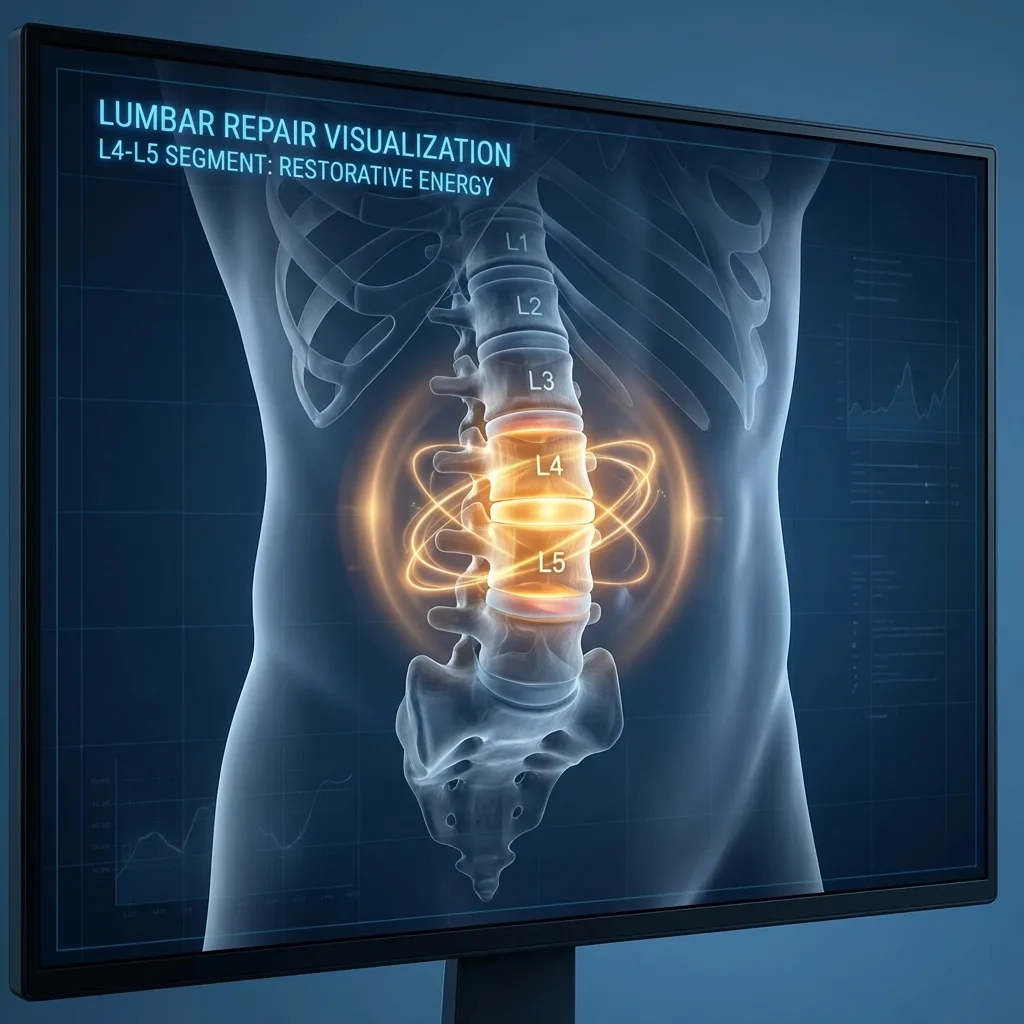
Consider a common clinical scenario: An individual in their sixties with a history of heavy occupational load bearing presents with severe Spinal Stenosis and lumbar degeneration. Despite previous surgical interventions like a laminectomy, chronic pain persists. MRI scans often reveal advanced degeneration at the L4/L5 vertebrae, leading surgical teams to conclude that further operative measures are unviable. The patient is often left with standard analgesics, which are profoundly inadequate for the severity of the condition.
Looking past outdated skepticism to newer, high-resolution data reveals a different therapeutic avenue. Studies featuring subjects with degenerative disc disease have demonstrated that specific supplemental protocols can yield not only significant pain reduction but also evidence of structural regeneration on follow-up scans within three to six months.
In clinical observations, when patients strictly adhere to a high-dose, targeted collagen protocol, many report dramatic reductions in debilitating pain, sometimes achieving near-total resolution within 4 to 8 weeks of consistent administration.
The Science: Why Your Collagen 'Engine' is Failing
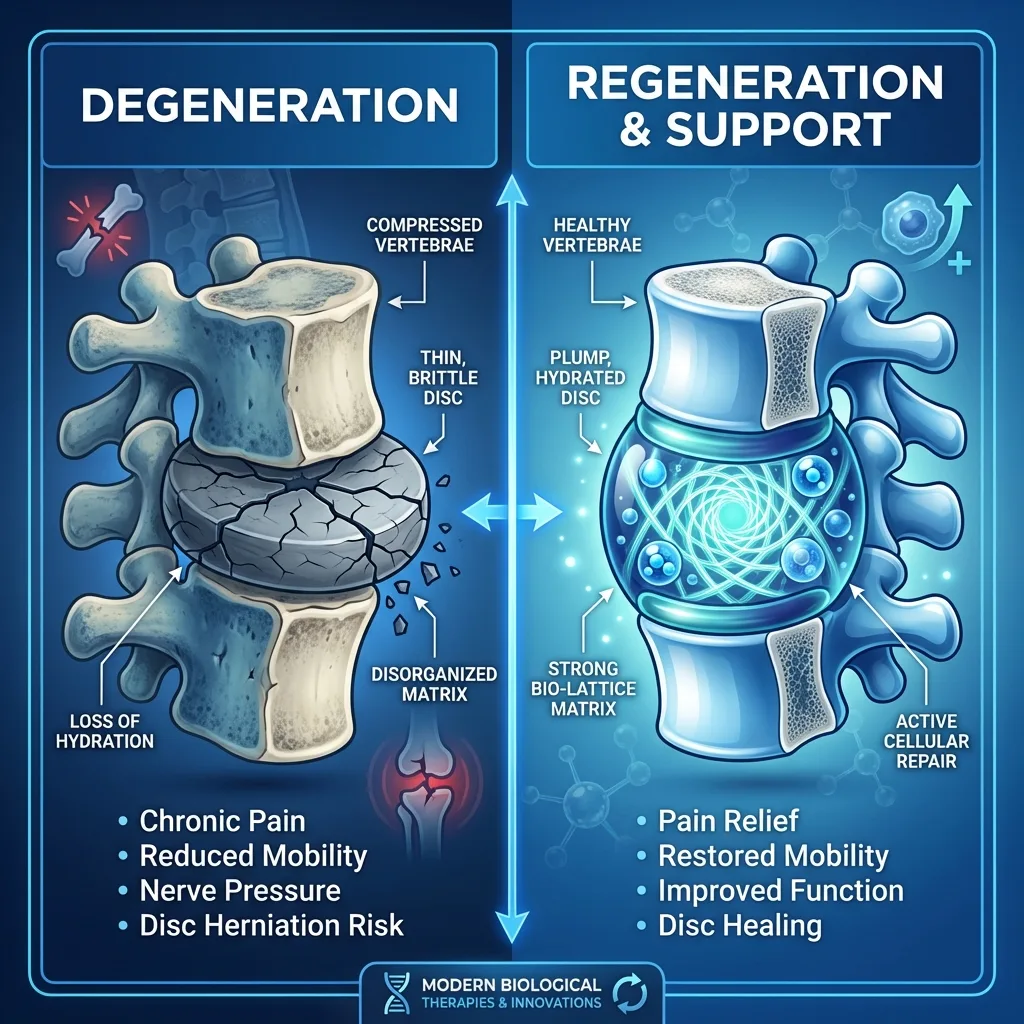
Why do modern protocols succeed where early trials failed?
1. The Regeneration Proof (The Tufts Study)
A landmark study by Dr. Timothy McAlindon at Tufts Medical Centre used a specialised MRI technique (dGEMRIC) to look at cartilage density. They found that subjects taking bioactive collagen peptides showed a significant increase in proteoglycan density: the actual structural "stuff" of our joints, after 24 weeks, with early signalling appearing as early as 3 months.
2. The Ageing Absorption Gap
As we age, we don't just "lose" collagen; we lose the ability to synthesise it. Our bodies become less efficient at absorbing the amino acids required to rebuild our musculoskeletal architecture. This is why a 70-year-old builder needs targeted, high-bioavailability peptides, not just "more protein." Without it, the skin thins, the bones weaken, and the spinal discs, which are 70% collagen, begin to collapse.
3. The 'Starving' Disc
Spinal discs are avascular, meaning they have no direct blood supply. They rely on "imbibition", which is the pumping of nutrients in and out. When we provide the body with specific collagen peptides, we are giving the disc the raw materials it can no longer manufacture on its own.
The Resilience Protocol: My Recommendation
If you are facing "bone-on-bone" or spinal degeneration, don't settle for the "Placebo" label.
- Type II Bioactive Peptides: Focus on collagen specifically shown to target cartilage and disc tissue.
- Monitor & Supplement: Collagen works best when Vitamin C and Vitamin D levels are optimised to act as catalysts for synthesis.
- Consistency: Like the research shows, regeneration is a slow burn. You need at least 3 to 6 months to see structural changes on a scan.
Measurable Tissue Regeneration Is Not a Placebo.
It is the biological result of providing the structural "engine" with the precise components required for repair.
Understanding Collagen Types: Not All Collagen Is Equal
One of the most common mistakes I see is patients buying generic "collagen powder" without understanding that there are distinct types, each targeting different tissues:
- Type I: The most abundant collagen in the human body. Found in skin, tendons, bones, and organs. This is the "structural steel" of your body. Supplementing Type I supports skin elasticity, bone density, and wound healing.
- Type II: Found exclusively in cartilage and intervertebral discs. Undenatured Type II collagen (UC-II) works through a different mechanism: it modulates the immune system to reduce the autoimmune attack on cartilage, rather than simply providing building blocks.
- Type III: Found alongside Type I in skin, blood vessels, and internal organs. It provides elasticity and is particularly important for vascular health.
For spinal degeneration and joint repair, Educational frameworks often suggest a combination approach: hydrolysed collagen peptides at 10-15g daily (providing Types I and III as general building blocks) plus 40mg UC-II for targeted cartilage modulation. Crucially, collagen synthesis requires Vitamin C as a cofactor. Without adequate Vitamin C, your body cannot integrate the collagen peptides into functional tissue. It is often advised to ensure individuals maintain at least 500mg Vitamin C daily alongside their collagen protocol.
An Educational Framework
- Foundation: Hydrolysed collagen peptides 10-15g daily (morning, dissolved in coffee or water). Take on an empty stomach or 30 minutes before a meal for optimal absorption. Pair with Vitamin C 500mg to support collagen synthesis.
- Target: For joint or disc-specific repair, add UC-II (Undenatured Type II Collagen) 40mg daily, taken at a separate time from hydrolysed collagen. Also ensure Vitamin D levels are above 50 ng/mL, as D3 regulates osteoblast and chondrocyte activity.
- Patience: Collagen regeneration is slow. Expect 8-12 weeks for noticeable improvements in joint comfort. Structural changes visible on MRI require 6+ months. Consistency is everything; missing days resets the saturation process.
Clinical Observation: Beyond the Spine
Collagen supplementation is not limited to spinal degeneration. In individuals presenting with medial compartment knee pain and MRI-confirmed cartilage loss on the medial femoral condyle, standard surgical consultation often projects joint replacement within a few years. However, when such patients are placed on a targeted protocol of 10g hydrolysed collagen peptides plus 40mg UC-II daily, supported by 1g Vitamin C and optimized Vitamin D levels (>50 ng/mL), clinical outcomes frequently shift. At six months, substantial pain reduction and restored mobility (e.g., deep squats) are commonly observed. By twelve months, follow-up imaging often shows arrested cartilage loss and indications of early cartilage remodelling. This is not anecdotal magic; it is foundational biochemistry. When provided with necessary raw materials and cofactors, the body demonstrates extraordinary repair capacity, even in avascular tissues, given sufficient time and consistency.
The pattern I see in clinical practice is consistent: patients who commit to a structured collagen protocol for at least six months, with the correct form, adequate cofactors, and realistic expectations, report meaningful improvements in joint comfort, skin quality, and structural resilience. Those who take generic collagen powder sporadically for two weeks and expect overnight results are invariably disappointed. Like all biological repair, collagen regeneration is a slow, cumulative process that rewards patience and consistency above all else.
Related Reading
- muscle loss and sarcopenia after 40 — the structural crisis
- chronic inflammation as root cause — joint pain and beyond
Explore the Pillar Topic
This article belongs to our core medical pillar on The Structural Integrity Protocol. For a comprehensive, physician-guided deep dive into this topic, read the full foundational guide.
Clinical Addendum
This content is for educational and informational purposes only. It is not intended as medical advice and should not replace consultation with a qualified healthcare professional. Always consult your physician before starting any new supplement, diet, or exercise programme.